The post Engagement Is Not Communication appeared first on Aluminati Network Group.
]]>
In Article 1 of this series, “The Illusion of the CRM: CRM vs Alumni Networking Platform, and Why You Need Both”, I made the case that CRM systems and alumni networking platforms serve fundamentally different functions. A CRM manages records and transactions. A dedicated alumni platform builds relationships. Most companies need both.
But owning both does not guarantee engagement.
That is the gap I want to close here.
87% of organizations running alumni programs say they need better engagement. Yet 80% still point to blogs, social posts, and e-newsletters as their primary channels. That gap is not a communication problem. It is an infrastructure problem.
Here is what most CRM-led programs actually measure versus what actually matters:
- What they measure: email open rates, event sign-ups, newsletter subscribers
- What actually matters: boomerang hires, referral quality, advocacy actions, mentoring uptake, introductions to new business
- What the gap reveals: a system built for broadcasting, not for value exchange
If your strategy relies on broadcasting, you are not engaging. You are making noise.
This article answers the practical questions – what features matter, what stack you need, what metrics prove ROI. But it answers them through one lens: the operating model that turns former employees into a measurable business asset.
Why the CRM-Led Alumni Database Model Breaks
CRM systems are built for quarterly sales cycles. They move prospects through a pipeline, close transactions, and hand off to the next stage. That logic works for revenue operations. It does not work for multi-decade alumni relationships.
When companies force alumni journeys into CRM architecture, the result is predictable. Stale records. Fragmented ownership. Weak personalization. No visibility into actual participation. The system was never designed to track whether a former employee mentored someone, made a referral, or introduced a client. It was designed to track whether they opened an email.
That is a fundamental design mismatch.
The deeper problem is data silos. Alumni data sits in the ATS, the HRIS, the email platform, and the CRM itself. Different records, different update cadences, different owners. The result is inaccurate data, duplicated contacts, and engagement strategies built on a foundation that no one fully trusts.
Layering AI on top of this fragmentation does not solve the problem. It accelerates it. Each new tool creates technical debt trying to compensate for gaps the underlying architecture was never designed to close.
“Corporate CRMs are built for quarterly speed. Forcing alumni journeys into sales funnels creates friction and missed opportunities.” – monday.com, 2026 CRM Guide
Here is how the two models compare at the operating level:
| Dimension | CRM-Led Database | Dedicated Alumni Infrastructure |
| Primary design purpose | Transaction management | Relationship continuity |
| Alumni identity over time | Static record | Dynamic, evolving profile |
| Peer-to-peer interaction | Not supported | Core feature |
| Personalization capability | Campaign-level | Individual behavior-driven |
| Integration with talent outcomes | Indirect, manual | Native, real-time |
| Measurable engagement signals | Open rates, clicks | Referrals, mentoring, rehires, advocacy |
| Data ownership | Shared across systems | Centralized, owned |
| Scalability for alumni lifecycle | Low | High |
The issue is not whether CRM data has value. It does. The issue is whether CRM architecture can function as community infrastructure. It cannot.
From Archived Contacts to Active Relationship Capital
Most companies have not made this shift. The reframe is straightforward.
Former employees are not a communications audience. They are a source of rehiring efficiency, referral quality, advocacy reach, mentoring capacity, and market access. Your role is not to broadcast at them. It is to facilitate a network where value moves between alumni, current employees, and the business.
This is what owned relationship capital looks like in practice:
Step 1: Records
You have names, job titles, exit dates, and email addresses. That is administration. Necessary, but not sufficient. A database of former employees is not an alumni program. It is a contact list.
Step 2: Relationships
You build structured pathways for alumni to connect with each other, with current employees, and with the organization. Mentoring, peer groups, events, job boards, and advocacy workflows turn passive records into active participants. 70% of companies have already moved to third-party alumni platforms to make this shift, up 11% since 2022.
Step 3: Return
Participation generates measurable outcomes. Boomerang hires reduce time-to-productivity and cut recruitment costs. Referrals improve candidate quality. Advocacy strengthens the employer brand. Mentoring retains institutional knowledge. Introductions open commercial doors.
The strategic question changes from “How many emails did we send?” to “What business outcomes did this network produce?”
Leading platforms now prioritize real-time synchronization with core HR and CRM systems. That integration layer turns relationship activity into reportable business value – the kind that holds up in a CFO review.
What Features Actually Matter in a Corporate Alumni Platform
Most feature comparisons list capabilities without asking the harder question: does this create business value, or does it add complexity?
The right filter is not “does this platform have X?” It is “does X enable value exchange, participation, or a measurable outcome?” Apply that lens and the list shortens fast.
| Feature | What It Enables | Business Value |
| Peer networking and directories | Alumni connect with each other and current employees | Referrals, introductions, commercial access |
| Mentoring and matching | Structured knowledge transfer between alumni and employees | Retention, institutional knowledge, talent development |
| Job board and referral workflows | Alumni refer candidates and explore boomerang opportunities | Reduced hiring costs, higher candidate quality |
| Groups and micro-communities | Alumni cluster by function, cohort, region, or interest | Deeper participation, stronger advocacy, relevant content |
| Events management | Structured touchpoints beyond email | Repeat participation, relationship reinforcement |
| Direct messaging and real-time communication | Frictionless peer-to-peer contact | Network activation, faster value exchange |
| AI-driven matching and personalization | Tailored content, connections, and opportunities | Higher engagement frequency, relevant participation |
| Mobile-first access | Engagement without friction, on any device | Day-to-day participation, reduced drop-off |
| Advocacy and ambassador workflows | Alumni actively promote the employer brand | Employer brand reach, talent pipeline quality |
| Integration with HRIS and ATS | Alumni data syncs with core talent systems | Boomerang hire tracking, referral attribution, unified reporting |
| Analytics and participation dashboards | Visibility into who is active and what they are doing | ROI reporting, program justification, CFO-ready metrics |
| Branded, owned environment | Company controls the experience and the data | Data sovereignty, trust, long-term relationship continuity |
Integration Only Works When It Connects, Not Just Syncs
Integration matters only when it supports a connected engagement layer rather than another reporting silo. The goal is a unified view: alumni activity feeding back into talent systems so that a boomerang hire, a referral, or an advocacy action is traceable and attributable.
AI-driven matching should be evaluated by one standard: does it increase participation, referral activity, and opportunity flow? McKinsey research shows AI-driven personalization can lift engagement by around 25% when recommendations reflect actual user behavior. That is a meaningful signal for any program justifying its budget.
The Ownership Question
78% of alumni prefer to access benefits and programs online. A mobile-first, branded environment reduces the friction that kills participation. More importantly, it keeps the relationship inside an owned channel – not dependent on public platforms you do not control.
The business case for a dedicated platform is not about features. It is about whether the infrastructure you have built can generate the outcomes you are being asked to report.
The Metrics That Prove Corporate Alumni ROI
Open rates do not appear in a CFO’s investment review. Boomerang hires do. Referral conversion rates do. Advocacy reach does. If the metrics your alumni program produces cannot connect to talent outcomes, employer brand value, or commercial relationships, the program will always struggle to justify its budget.
A healthy corporate alumni community produces measurable signals across 4 categories:
- Talent outcomes: boomerang hire rate, time-to-productivity for returning employees, referral volume, referral-to-hire conversion, candidate quality scores
- Participation signals: repeat login rate, mentoring uptake, group activity, event return rate, direct message volume
- Advocacy indicators: employer brand mentions, referral source attribution, ambassador program participation, content sharing
- Relationship capital: introductions made, business development connections, partnership conversations initiated through the network
The reason most CRM-led programs cannot report these metrics is structural. A CRM captures campaign outputs. A dedicated alumni platform captures interaction patterns, network behavior, and participation depth. The data is fundamentally different because the architecture is fundamentally different.
Direct academic evidence strongly supports that segmented/personalized outreach increases engagement behaviors. The mechanism is not magic. It is relevance. When former employees receive content, opportunities, and connections that reflect their actual career profile and behavior, they participate. When they participate, they generate measurable business value – referrals, introductions, boomerang applications, and advocacy that a broadcast email cannot produce.
This is where the business case becomes commercially defensible. Not in the feature list. Not in the engagement dashboard. In the line items that show up when a CFO asks what the program actually produced.
Decision Test: Do You Have Alumni Infrastructure or Just Alumni Records?
If your current setup mainly stores data, sends updates, and logs attendance, it is administration infrastructure. That has value. But it is not relationship infrastructure, and it will not produce the outcomes you are being asked to deliver.
Run this test against your current stack:
- Can alumni connect directly with each other and with current employees, without going through a company-managed intermediary?
- Does your platform support structured mentoring, peer groups, and advocacy workflows, or just communications?
- Can you track a boomerang hire, a referral, or a business introduction back to alumni network activity?
- Do alumni have a dynamic, evolving profile that reflects their career progression after leaving, or just an exit record?
- Is participation data feeding back into your talent and HR systems in real time, or sitting in a separate reporting silo?
If the honest answer to most of these is no, you have alumni records. Not alumni infrastructure.
As I covered in Article 1 of this series, “The Illusion of the CRM: CRM vs Alumni Networking Platform, and Why You Need Both”, the system architecture question matters. But architecture alone does not produce engagement. The operating model has to follow.
The shift from database to dynamic community is not a technology decision. It is a leadership decision about what your former employees are worth to the business, and whether you are willing to build the infrastructure that proves it.
If you are evaluating whether your current model is delivering, start with the 5 questions above. If you are building the case for a more structured approach, I am happy to have that conversation.
This is Article 2 in the “From Databases to Dynamic Communities” series.
Frequently Asked Questions
What is the difference between a CRM and a dedicated alumni engagement platform?
A CRM is built for transaction management – moving prospects through a pipeline and closing deals. A dedicated alumni platform is built for relationship continuity – supporting peer networking, mentoring, referrals, and long-term participation. The two systems serve fundamentally different purposes. Most companies need both, but only one can function as community infrastructure.
Why do most corporate alumni programs fail to generate measurable ROI?
Because they are built on broadcast logic. Sending newsletters and tracking open rates is administration, not engagement. Programs that produce measurable ROI – boomerang hires, referrals, advocacy, mentoring – are built on infrastructure that enables value exchange, not just outbound communication.
What features should I look for in a corporate alumni engagement platform?
Prioritize capabilities that create interaction and traceable outcomes: peer networking, mentoring and matching, job boards and referral workflows, advocacy tools, groups, events, direct messaging, and AI-driven personalization. Integration with your HRIS and ATS is essential so that alumni activity feeds back into talent reporting. Everything else is secondary.
How do I measure the ROI of a corporate alumni program?
Stop measuring campaign outputs and start measuring business outcomes. The metrics that matter: boomerang hire rate, referral-to-hire conversion, mentoring uptake, repeat participation, advocacy reach, and business introductions generated through the network. These are the numbers that hold up in a CFO review.
Can a CRM be configured to function as an alumni engagement platform?
In theory, yes. In practice, the configuration cost, technical debt, and ongoing maintenance make it a poor investment. CRMs lack native peer-to-peer interaction, identity continuity, and community-specific workflows. Companies that try to force alumni engagement into CRM architecture typically end up with stale records and low participation. A purpose-built platform is structurally better suited.
What is boomerang hiring and why does it matter for alumni strategy?
Boomerang hiring is the practice of rehiring former employees. It matters because returning employees ramp faster, already understand the culture, and typically perform at a higher level than external hires. A well-structured alumni network creates the conditions for boomerang hiring by keeping former employees engaged, informed, and connected to current opportunities.
How does AI improve corporate alumni engagement?
AI-driven personalization can lift engagement by around 25% when recommendations reflect actual user behavior. In practice, this means matching alumni to relevant job opportunities, mentoring partners, peer groups, and content based on their career trajectory and platform activity. The result is higher participation frequency and more relevant value exchange.
What is the risk of relying on LinkedIn as an alumni engagement channel?
LinkedIn is a public platform you do not own or control. Your alumni data sits on their infrastructure, subject to their algorithm and policy changes. You cannot track participation depth, run referral workflows, or integrate activity back into your talent systems. It is a useful awareness channel, not a substitute for owned relationship infrastructure.
How long does it take to build a productive corporate alumni community?
It depends on the size of your alumni base and the quality of your existing data. Companies that launch with a clear value proposition – job opportunities, mentoring, peer access, exclusive content – typically see meaningful participation within the first 90 days. The programs that stall are the ones that launch with a newsletter and call it a community.
When should a company invest in dedicated alumni infrastructure?
When the cost of not having it becomes visible. If you are losing boomerang hire opportunities, generating referrals at a low rate, struggling to justify your employer brand spend, or sitting on a database of former employees with no structured way to activate them – that is the signal. The business case is straightforward: owned relationship infrastructure produces measurable talent and commercial outcomes that a CRM list cannot.
The post Engagement Is Not Communication appeared first on Aluminati Network Group.
]]>The post The Illusion of the CRM: Alumni Database vs Networking Platform appeared first on Aluminati Network Group.
]]>I have spent years working with institutions that are proud of their alumni databases. Tens of thousands of records. Carefully maintained contact fields. Export-ready segments. And almost no meaningful engagement.
That gap, between the data an organization holds and the relationships it actually has, is the central problem in alumni strategy today. Most organizations believe they own their alumni relationships because they own their data. They don’t.
A CRM is an archive of what was once true. A community is a living reflection of what is true now.
Data is an archive. A community is an ecosystem. Confusing the two is both a technology mistake and a leadership oversight.
The alumni database software market is currently worth USD 1.16 billion, according to Research and Markets. That is a significant institutional investment in systems that store information. The harder question, the one most procurement conversations never reach, is whether that investment is building relationships or simply cataloguing them.
This article is about that distinction. And why the question most leaders are asking, CRM vs networking platform, is the wrong place to start.
Why ‘Alumni Database Software vs Networking Platform’ Is the Wrong Question
When alumni leaders search for alumni database software vs networking platform, they are looking for a clear answer. The problem is that the question itself forces a binary choice that does not reflect how an effective alumni strategy actually works.
These two categories solve fundamentally different problems. Understanding that distinction is the starting point for better infrastructure decisions.
| Alumni Database Software | Alumni Networking Platform | |
| Primary function | System of record | System of engagement |
| What it manages | Contacts, segments, compliance, reporting | Profiles, groups, events, mentoring, interaction |
| Data direction | Institutional to alumni (outbound) | Alumni to alumni and institution (bidirectional) |
| Participation model | Passive storage | Active participation |
| Core value | Governance and segmentation | Relationship vitality and return visits |
The distinction matters because alumni communities are built to create engagement (which then turns to ROI), and data storage is not exactly a conducive environment for engagement.
Modern alumni platforms include events modules, job boards, groups, networks, knowledge centers, and engagement tools that create a 360-degree view of alumni activity. These can often integrate with HR Systems, Business CRMs, Event Management Systems, and Document Management Systems. That integration is a shift in how institutions think about alumni infrastructure, which becomes part of the overall structural management of the company.
The institutions making that shift are not choosing between a database and a platform. They are building both and connecting them.
What a Database Can Do, and What It Cannot
I want to be precise here, because this argument is sometimes misread as an attack on CRM. It is not.
A well-maintained alumni database is genuinely valuable. It is the institutional memory of your community. Without it, you cannot segment outreach, manage consent and compliance, report on engagement over time, or build the kind of targeted campaigns that drive meaningful results.
What a strong alumni database delivers
- Centralized contact records and historical engagement data
- Segmentation by geography, work history, or demographic data
- Compliance and data governance across GDPR and corporate policy
- Reporting infrastructure for alumni leaders and corporate sponsors
What it cannot do on its own
What a database cannot do is give alumni a reason to return. It cannot create peer-to-peer interaction, facilitate mentoring, offer relevant job opportunities, run events with feedback loops, or generate the kind of ongoing participation that keeps records accurate and relationships active.
People today have access to other sophisticated digital platforms, often structured around algorithms that allow them to rapidly and efficiently find what they are looking for. Alumni do not want to be contacted only when the company needs something or wants to communicate with them one-way. They want ongoing access to a community that serves their professional and personal interests.
A database, on its own, cannot deliver that. It creates a contactable audience. Not an active community.
The Real Failure Is Stale Data
Here is where the strategic risk becomes concrete.
Alumni careers move fast. People change employers, relocate, shift industries, take on new responsibilities. If your alumni records are not moving with them, your segmentation is degrading silently, and your outreach becomes less relevant with every email or newsletter you send.
Stale data is a strategic failure.
If your data does not move at the speed of your alumni’s careers and evolving expectations, your strategy is obsolete before it begins.
Consider what stale records actually cost:
- Relevance decay. Outreach based on outdated job titles, employers, or locations misses the mark and erodes trust.
- Segmentation collapse. The more records drift from reality, the less useful your targeting becomes.
- Lost visibility. You cannot identify future advocates, boomerangs, or mentors from data that no longer reflects who your alumni are.
- Wasted team effort. Small alumni teams spend time manually chasing updates that a connected system should surface automatically.
This is where Social Data Sync becomes operationally significant. Rather than waiting for alumni to update their own profiles, or relying on periodic data cleansing exercises, Social Data Sync keeps institutional records aligned with real-world career movements. It is not a feature, it is the mechanism that stops your database from becoming an archive.
Sector research shows that organizations using segmented, targeted outreach see roughly 25% higher event participation than those relying on broad-based communication. That uplift depends entirely on data quality. And data quality depends on data that moves.
A Better Model: System of Record Plus System of Engagement
The organizations that are getting this right are not debating CRM vs platform. They have moved past that framing entirely. They are building connected infrastructure: a system of record working alongside a system of engagement, with data flowing between them.
Here is what that model looks like in practice.
1. System of record
Your CRM is the foundation. It stores institutional truth: contact permissions, historical engagement, segmentation data, compliance records, and advancement history. It is the layer that governance and reporting depend on.
Without a reliable system of record, you cannot make confident decisions about who to contact, when, or why.
2. System of engagement
Your alumni networking platform is where relationships become active. It is where alumni update their own profiles, join interest groups, search for jobs, participate in mentoring, register for events, and connect with peers.
Critically, every interaction on the engagement layer generates a signal. Who is active? Who is returning? Who is mentoring? Who has updated their career information? Who clicked on that job offer? Those signals flow back into the system of record, keeping data fresh and outreach relevant.
The shift this creates is from data ownership to network vitality. You move from knowing who your alumni were to understanding who they are now, and what they are willing to do.
According to sector analysis from 2025-2026, the strongest alumni programs are those that connect participation data to advancement strategy, rather than treating engagement and database management as separate workstreams.
That connection is the model that shapes the future success of your alumni initiative.
What Leaders Should Evaluate Instead of Feature Lists
When I speak with alumni leaders who are evaluating alumni infrastructure, the conversation too often starts with features. Job boards. Event management. Email automation. Engagement tracking. These matter, but they are not the right starting point.
The right starting point is outcomes. What benefits do organizations and alumni expect from each other?
An executive evaluation checklist
- Does engagement data flow back into institutional records automatically? If participation signals stay locked inside the engagement platform and never update your system of record, you are running two separate silos, not an integrated strategy.
- What does your active member rate actually look like? Database size is not a proxy for community health. Measure repeat event attendance, job searches, groups participation, profile update frequency, and regular logins.
- Can your team personalise outreach without adding operational overhead? Lean alumni teams need infrastructure that surfaces the right people at the right time, not systems that require manual segmentation before every event.
- Do you own your data and your community environment? Social platforms like LinkedIn or Facebook can support discovery and alumni reach, but they cannot replace a governed, branded, institution-owned community. You have no visibility into who is engaging with whom, no data portability, and no control over the experience.
The question is not which single tool does everything. The question is whether your infrastructure is designed to increase alumni engagement as a continuous outcome, not just as an event-by-event effort.
Measure Vitality, Not Database Size
The database is only one part of the infrastructure. The institutions that will lead in alumni engagement over the next decade are not the ones with the largest contact lists. They are the ones who know which alumni are actually active and have the systems to act on that knowledge continuously.
Before your next infrastructure review, I would ask you one question: what percentage of your alumni database is genuinely active right now?
Not contactable. Not on record. Active.
If you do not have a confident answer, that is the gap your strategy needs to close.
In the next article in this series, I will address exactly how to measure that. Not database size, but network vitality: the metrics, signals, and leadership frameworks that tell you whether your alumni community is growing stronger or quietly losing momentum.
This is Article 1 in the series: From Databases to Dynamic Communities.
Frequently Asked Questions
What is the difference between alumni database software and a networking platform? Alumni database software is a system of record. It stores contact details, permissions, segmentation, and reporting. A networking platform is a system of engagement. It helps alumni interact through profiles, groups, mentoring, events, and peer connections. Most institutions need both to keep data current and participation active.
Why is the database vs networking platform question the wrong one? It forces a false choice. A database is built to manage truth, governance, and compliance. A networking platform is built to create participation and return visits. The strongest alumni strategy connects both, so records stay accurate while the community remains active and visible.
Can a database alone improve alumni engagement? No. A database can support segmentation and outreach, but it cannot create reasons for alumni to return, update their profiles, or connect with each other. Engagement depends on interaction, relevance, and repeated participation, which requires a community layer.
What is Social Data Sync in alumni strategy? Social Data Sync helps keep alumni records aligned with real career movement. Instead of relying only on manual updates, it reflects changes in roles, employers, and locations back into the institution’s data. That reduces stale records and makes outreach more relevant.
Why does stale alumni data matter? Stale data weakens timing, relevance, and trust. If job titles, employers, or locations are out of date, outreach misses the mark and segmentation becomes less useful. Over time, the institution loses visibility into who is active, who is ready to help, and who has moved on.
What should leaders measure instead of database size? Measure active member rate, repeat event attendance, mentoring activity, profile freshness, and participation between campaigns. These signals show whether the network is alive, not just how many records are stored in the system.
How does a system of engagement help lean alumni teams? It reduces manual work by capturing fresh signals automatically. When alumni self-update profiles, attend events, or join groups, the team gets usable data without constantly chasing it. That makes personalisation and follow-up more scalable.
Are LinkedIn groups or Facebook groups enough for alumni engagement? They can help with discovery and early community building, but they do not replace owned infrastructure. Institutions need governed data, full visibility, and control over the experience. Social platforms can support the journey, but they cannot run it.
How does connected alumni infrastructure improve participation? When engagement data flows back into records, teams can target the right people with the right message at the right time. That improves relevance and typically supports higher participation, especially for events, mentoring, and volunteer activity.
What should I ask when choosing alumni software? Ask whether the platform only stores records or also drives participation. Check whether engagement signals feed back into the CRM, whether alumni can self-update their data, and whether the system helps your team increase activity without adding admin burden.
The post The Illusion of the CRM: Alumni Database vs Networking Platform appeared first on Aluminati Network Group.
]]>The post The Interactive Corporate Community Platform Features You Need to Boost Engagement appeared first on Aluminati Network Group.
]]>Are your corporate community members less active than they used to be? You might be missing a vital piece: understanding exactly what engages your community.
With Aluminate’s Insight feature, you can clearly see which activities resonate most with your members, allowing you to focus your efforts effectively. Think of it as having headlights guiding your way, ensuring you’re never driving in the dark.
Here, we’ll explore the essential interactive features to engage your corporate community and keep it thriving.
What is a corporate community platform?
If you have a business, then you have a corporate community. A corporate community network includes employees and leadership from within the organization. However, it can also include corporate alumni (ex-employees) and external stakeholders like business partners, customer communities, collaborators, and suppliers.
A corporate community platform is the space where the whole corporate community comes together to connect, communicate, and collaborate. It facilitates the sharing of knowledge and resources. It also helps members build a better, stronger corporate community together.
Benefits of a corporate online community platform
If you want a successful online community, you need the right online community platform. That means you have a community that supports a wide variety of community initiatives and activities, and that you can scale to grow along with your community.
How do you know that you have the right corporate community platform? You’ll know it when it offers benefits for all members of the corporate community. The best community platform offers members the following benefits:
Alumni network engagement and a talent pool for ‘boomerang hiring’
An online community platform keeps the lines of communication open with your former employees. It keeps them all actively engaged in a corporate alumni network within your corporate community.
A corporate community platform also gives you access to a talent pool of qualified candidates for succession hiring. Corporate alumni make excellent candidates. These rehires, known as ‘boomerang hires’, hit the road running as they already have the necessary inside knowledge.
Camaraderie, community building, and access to mentorship
An online community platform is a virtual meeting place that fosters connections, lifelong business partnerships, and meaningful relationships.
Everyone has something to teach and to learn. Senior employees can share a wealth of knowledge borne of experience. Junior employees can teach seniors how to adapt to the latest technologies and trends. Corporate alumni can mentor current employees.

Industry news plus professional and personal development resources
A corporate community platform allows corporate community members to access resources like online courses and tutorials for personal growth and career development. These new skills make them even more valuable to the community at large.
You can use the online platform to highlight all the latest industry news and trends, keeping business partners and collaborators’ members informed and engaged. That’s a starting point for more targeted project planning and brainstorming sessions.
Networking and philanthropic opportunities
A corporate community platform provides members with community spaces ideal for virtual networking opportunities. Those geographical barriers are no longer a problem; they just melt away in the face of innovation and enterprise.
It lets your members give something back to the larger community that has supported them. The platform acts as a collaboration space for the exchange of ideas and managers planning corporate social responsibility (CSR) community events.
Where to get the top interactive corporate community features that boost engagement
A great community platform multiplies all the benefits. Let’s examine the top interactive corporate community platform features you need for your corporate community to thrive.
Aluminati, the world’s most customizable online community software platform, brings you Aluminate for Enterprise, the best online community platform for corporate communities. But what makes it the best corporate community management platform for engagement compared to other online community platforms?
There are three reasons leading organizations choose Aluminate as their online community platform:
- It’s fully customizable. You can personalize every element of the platform to better engage your corporate community. Use it for building a corporate alumni network, as an enterprise social network, for social networking—whatever you need.
- It’s a user-friendly platform. There’s no stress about special training and learning curves. Aluminate for Enterprise is feature-rich yet easy to navigate for the best user experience. This means it’s quick to adopt, and your corporate community will want to keep using the platform.
- It’s highly dynamic. You can keep your corporate community up-to-date with the latest events and news whenever they log in. You can personalize everything on the Aluminate platform so that each member sees what is most relevant to them. This is the key to reactivating dormant corporate alumni networks.
- It’s incredibly interactive. The Aluminate platform strives to make corporate community involvement fun, with interactive features that rival the other community platforms. It’s the leading choice among top organizations looking to engage their communities.
Best of all, it has the platform features you’ve been looking for.

Community-wide engagement
Get ready for community engagement across the board—the digital dashboard. The digital dashboard is the core of the Aluminate Community Builder and the key to building a thriving online community.
Use it to post the latest industry news, trending topics, and invitations to networking events. Create online courses and manage virtual events. You can get as specific as you like because our matching engine algorithm ensures that users are matched to the concepts most relevant to them. On Aluminate for Enterprise, you can cater to every niche.
Engagement through special interest groups
They may all be part of your corporate community, but your members have their own skills and interests. Speak to the special interests and skills of your valued members by creating safe spaces for them to socialize.
Our interactive groups module allows you to create sub-communities and private discussion forums within the larger corporate community. Create one for corporate alumni, for current employees, for business partners, and collaborators. Group members according to special interests or location.
As your community grows, members will naturally gravitate toward certain groups. That’s fine; they can choose to join the groups that appeal most to them.
Engaging, life-changing mentorship
Mentorship doesn’t just aid in transferring knowledge from one generation to the next. It works both ways in a multigenerational corporate community.
It’s life-changing, and with Aluminate, it’s easier to match mentors and mentees than ever before. Our matching engine algorithm doesn’t just match users to concepts but also to other users. It acts as a mentor-mentee matching feature to support our interactive mentoring module.
Your corporate community members can easily find the right mentor or mentee without wasting any time or effort.

Get Interactive with Aluminate for Enterprise
An engaged corporate community is the key to business success. A dedicated corporate community platform can offer countless benefits that help your company and your community to thrive. And with the latest interactive features, it will offer you so much more.
Look no further than Aluminate for Enterprise, the most customizable online corporate community software. We have the key features it takes to build an innovative and resilient corporate community. Request a demo today.
The post The Interactive Corporate Community Platform Features You Need to Boost Engagement appeared first on Aluminati Network Group.
]]>The post Beyond the Exit: Using Surveys to Maintain Strong Alumni Relationships appeared first on Aluminati Network Group.
]]>Leading enterprises use exit surveys to gain valuable feedback from departing employees, helping them understand their experiences and identify areas for improvement. This feedback is crucial for refining company policies, improving workplace culture, and addressing employee needs. But there’s so much more to gain from these surveys.
We’ll show you how exit surveys provide the insights necessary for lasting and impactful change. Learn how to go beyond the exit using survey responses and Aluminate for Enterprise to create stronger, more engaged relationships with former employees and enhance your company’s long-term success.
What is an alumni exit survey?
An exit survey for enterprises gathers important information from departing employees. As they leave the company and transition to new opportunities, their survey responses provide firsthand insights into their past experiences and future expectations.
An exit survey can be conducted telephonically, online, or by mail. Most enterprises find online surveys more convenient for all parties. Many organizations leverage online survey templates. If you choose, customize it to suit your company and its objectives.
Exit survey question examples
The way enterprises structure their exit surveys may differ. However, the purpose remains the same.
You want to understand employees’ experiences and determine how they view their time with your company, as well as how you can foster ongoing engagement after they leave. Structure the questions to align with your company’s objectives and its policies on gathering employee feedback.
Employment preparedness
These questions about employment prospects help identify the roles or experiences that left employees ill-prepared for their next steps. This feedback offers an opportunity to support employees during their transition and helps pinpoint alumni with higher earning potential, which can also inform your fundraising efforts fundraising.
- Are you currently employed, or do you have confirmation of employment within the next year?
- How long did it take for you to secure formal employment after leaving the company?
- How prepared do you feel for your new role? Rate your answer on a scale of 1-10, with 1 being wholly unprepared and 10 being fully prepared. Please explain your rating.
- What was your role with the company, and was it instrumental in securing your next employment? What skills or knowledge would have better prepared you for your next opportunity?
Interests and aspirations
Follow up with questions about employees’ personal goals and aspirations. Responses to these types of questions provide insights into how your enterprise can improve employee experiences and ongoing relations.

This feedback helps you build a reputation as a supportive, employee-focused organization.
- Did you participate in any company programs or initiatives, and did they enhance your overall experience?
- Did you feel supported by your managers, colleagues, and the company as a whole? If yes, tell us why. If not, what could have been done differently?
- Would you recommend the company to others seeking employment? If yes, tell us why. If not, tell us what we can do to improve.
- Do you consider your next job as the realization of your career goals or merely a stepping stone toward further career fulfillment?
Alumni network participation
As former employees of your enterprise, the respondents are already part of your extended network. Your goal is to encourage them to stay connected and actively participate in your alumni program. Answers to questions like these help identify potential candidates for future involvement in your network.
- Are you aware of our company’s alumni network and interested in staying connected?
- Would you be willing to participate in alumni events and activities or fundraising campaigns?
Turning data into actionable insights
Once you have collected all the data from your exit surveys, it is time to interpret the results and take meaningful action.
- Interpreting Exit Survey Data: Analyze the responses carefully. Is there a common theme between the answers to specific questions? Can you identify any recurring patterns or trends? This analysis will help you pinpoint the most urgent issues affecting your employees.
- Implementing Changes Based on Feedback: The feedback you receive in your exit survey provides valuable insights that can help you refine company processes, improve workplace culture, and enhance employee retention strategies. Address the most common complaints or concerns raised by departing employees. Use this feedback to inform changes in HR policies, management practices, and internal communications, and refer improvement suggestions to the relevant departments for follow-up.
The benefits of conducting an alumni exit survey
When you ask employees to complete an exit survey, your company can enjoy these benefits:
Enhanced reputation
Survey results enable you to make data-driven improvements that can enhance your company’s image, improve employee satisfaction, and attract top talent. You can also use the insights from the survey data to refine your alumni network program and increase engagement with former employees.
If you want to build a strong and reputable alumni network, you need the right platform. You need Aluminate for Enterprise, brought to you by Aluminati, the world’s most customizable alumni engagement software.

Strengthening your employee alumni network
Gathering feedback about former employees’ interests will show you how to strengthen post-employment relationships and increase engagement within your company’s alumni network.
Aluminate offers a range of dynamic features that boost employee engagement and strengthen connections. Our groups module allows you to segment your growing alumni network into sub-communities, with dedicated spaces tailored to their interests.
Institutional improvement
Exit survey responses can highlight areas in need of improvement within your company’s policies, programs, and support structures. This drives company-wide improvement, ensuring a better experience for future employees.
Departing employees can be approached to take on mentoring roles within your alumni network.
Aluminate can support this process. Our e-mentoring module is a fully scalable, peer-to-peer system that connects employees with mentoring opportunities. We have also developed a Matching Engine algorithm that matches suitable users for such programs within your network.
Boosting your alumni exit survey response rate
Is your exit survey response rate falling short? Boost it with these simple strategies.
Incentives and ease of access
What can you offer respondents in return for their time and participation? An exit survey is more likely to attract interest when there’s an incentive attached, such as exclusive offers or discounts on company services.
Personalized follow-up
Follow-up questions provide deeper insights into the initial responses given in the survey. While your exit survey may include standard questions, make sure your follow-up is more personalized. This shows respondents that you value their opinions and are genuinely interested in their feedback.
Measuring success
Your exit survey data will reveal areas for improvement within your company’s operations, culture, and employee support programs. It will also highlight which questions received detailed responses and which did not.
Revise your survey structure and questions to ensure you receive more useful feedback in the future.
Choose the Aluminate for Enterprise platform to post updates about surveys and follow-up surveys. With our Insights feature, you’ll be able to easily track how much engagement your surveys attract.
The future of alumni engagement: beyond the exit
An exit survey helps you discover what matters most to departing employees. You’ll learn what they valued about their time with your company, where they felt improvements could have been made, and what they expect from their future careers. This required feedback will give you insights into how to build a more engaged and connected alumni network.
That’s where Aluminate for Enterprise can help, guiding you and your employees toward a future of lasting engagement. Are you ready to go beyond the exit and create a thriving alumni network that strengthens your company’s long-term success? Request your demo and start building that future today.
The post Beyond the Exit: Using Surveys to Maintain Strong Alumni Relationships appeared first on Aluminati Network Group.
]]>The post Virtual Alumni Engagement Ideas For Your Network appeared first on Aluminati Network Group.
]]>The key to any successful alumni network is keeping your alumni community engaged.
While this is traditionally done through events, you might want to consider some virtual alumni engagement ideas. Many of your alumni probably already live their lives online and remotely, so they might not be interested in in-person events.
Virtual engagement ideas can help you to bring your alumni together, regardless of where they are based in the world. Best of all, virtual engagement ideas are often a lot easier to set up than in-person events.
To help you get started, here are ten of the best virtual alumni engagement ideas for your network.
1. Alumni Quiz
You can facilitate a quiz online through a chat or a poll. This is easy to set up, and it’s also easy for your alumni to engage with – which makes it one of the best virtual alumni engagement ideas.
A good strategy is to run a nostalgic quiz about your institution. You can ask questions based on old pictures of events, your institution, faculty, and more. Alternatively, you can run quizzes about interesting facts about certain industries, or you can base them on current affairs.

2. Virtual Speaking Event
One of the most popular alumni engagement strategies is a speaking event. It’s possible to take these events and run them in an online format. This makes the event completely accessible to your virtual alumni network.
Try to find an interesting or inspiring speaker who will pull in a crowd. This speaker could be a successful or interesting member of your alumni. Or they could be an established public speaker, a celebrity, an accomplished business person, or anyone else who might entice your community to sign-up.
Ensure to include time for a live question and answer session to get your alumni actively participating. This creates more engagement and enjoyment from the virtual event.

3. Webinar Series
A webinar series is one of the best ongoing virtual alumni engagement ideas. Much like a speaking event, this involves finding guests for each webinar. However, these guests don’t necessarily have to be as “high profile” as your once-off speaking event. These guests can include your alumni, and/or anyone with a particular area of expertise or interest.
You can run these events weekly or monthly to help maintain consistent engagement. They’re easy to manage on a platform like Zoom, where attendees can join and contribute to the conversation virtually.
An effective webinar series should cover a wide range of topics. As long as these topics are valuable to your alumni network, you have a lot of freedom to choose different types of speakers and host different kinds of conversations.

4. Virtual Scavenger Hunt
Everyone loves a scavenger hunt. They’re fun, they require some brain power, and they’re an excellent team-building exercise. When it comes to virtual alumni engagement ideas, scavenger hunts are one of the best ways to bring your alumni together and get them interacting with each other.
There are plenty of virtual scavenger hunt websites out there – many of them free. This makes it easy to organize and run these events. You can even run these events as an ongoing series with a team leaderboard.
While speaking events and webinars are often one-sided, scavenger hunts are more conversational and engaging. This makes them an excellent social experience in a virtual setting.

5. Online Games
If scavenger hunts aren’t appealing to your alumni network, there are many online games that you could use for engagement events. This includes anything from drawing and picture games to Balderdash, general knowledge games, and more.
Games events are a fun way to get your disconnected alumni engaging with each other and with your organization. They require minimal effort to organize, and they can result in a far more active alumni network.
And while your alumni network plays these games, it provides an excellent opportunity for conversation and networking.

6. Mentorship Programs
Facilitating mentorship programs is one of the most valuable alumni engagement strategies. You can invite willing participants from your older and younger alumni networks to act as mentors and mentees.
Older alumni can share their knowledge and experience, which will add a great deal of value to younger alumni.
This can all be done online through virtual meetings. This makes mentorship programs an excellent way to keep your alumni engaged, add value and build a stronger community.
Many fresh graduates and young professionals are interested in joining mentorship programs. By facilitating a mentorship opportunity with your alumni, you can provide an excellent incentive for more people to join and engage with your alumni program.

7. Development Sessions
By introducing professional development sessions, you can run various development events, such as workshops and masterclasses taught by experienced and successful alumni. This will get fresh graduates and young alumni interested and active.
These kinds of development sessions can follow all kinds of themes, as long as they provide actionable takeaways to assist alumni with professional development.
You could run basic how-to short courses to expand on alumni’s knowledge, provide business strategies, and any other kind of development session that makes sense for your alumni.

8. Video Lessons
Virtual alumni engagement ideas don’t all have to be live and in real-time. One great tactic is to create video lessons that you can share with your alumni. Your institution can either create a series of lessons, or you can ask alumni to submit their own video lessons on certain topics.
These videos can be about any topic, as long as they are educational in some way. Giving your alumni exclusive access to these lessons is a great way to gain more engagement and inspire more people to join your alumni program.
9. Virtual Lunches
Virtual gatherings like breakfast or lunch should have some kind of purpose so that they’re not just a group of people eating at their screens. You could organize a workshop, a presentation, or an industry-specific networking event. Whatever the case, adding lunch to the occasion can be an excellent ice breaker.

10. Photo Contests
A fun way to engage alumni online is to run a regular photo contest. Ask your alumni to submit photos of your institution, their time on campus, special events, or more. You could also run a similar contest, where you ask alumni to caption a photo that you post.
This is a great way to get your alumni feeling nostalgic, and the content that your alumni share could bring about some great conversations and memories with other alumni.
Conclusion
Implementing new and innovative virtual alumni engagement ideas is always a good move in today’s digital world, especially when your community is spread out on a global scale.
Creating virtual events makes engagement more accessible for a greater portion of your alumni. This could help you boost overall engagement in a big way.
Of course, the best strategy is to combine traditional alumni engagement strategies with virtual alumni engagement ideas. This will help you offer a more comprehensive alumni engagement strategy that appeals to everyone.
Why not find out how Aluminati can help grow your online networks?
[activecampaign form=1]
The post Virtual Alumni Engagement Ideas For Your Network appeared first on Aluminati Network Group.
]]>The post Community Portal Software: 6 Benefits For Your Institution appeared first on Aluminati Network Group.
]]>Using community portal software can be the secret to a highly engaged community, and a highly engaged community offers many advantages to your institution.
Whether your community is internal or external, or whether you’re running a college or a company, you’ll need to have a place where your community can connect, interact, and network.
In this guide, we’ll outline what community portal software is, why it’s important, and we’ll outline some of the main advantages of using this software. Whatever kind of organization or community you manage, these benefits apply to your institution.
Find out how Aluminati can help you make the most of your alumni community.
What is Community Portal Software?
When institutions create strategic communities, these communities can take on different forms, such as student communities for universities, professional networks for companies, or even special information communities for business customers.
Whatever the case, these communities are where people can connect, engage with each other, and access relevant information.
Community portal software is what makes these communities possible. With the right community software solution in place, your members can join the community, connect with other online community members, and access your community content.
Online communities are created with a specific purpose, which is your institution. Within this, you could have various sub-communities. These could cover specific areas of interest or information that different members might be looking for. Your community portal provides a space for community members to search for these different topics that are of interest to them.
Community portal software is generally based around a member directory. This lists all members in the community and makes it easy for members to search for other people and make strategic connections.

6 Benenfits Of Community Portal Sotware
Creating an online community is vital for all kinds of institutions and organizations. However, the success of the community generally comes down to the community portal software used.
Here are some of the main benefits of using specialized community portal software. Use these benefits to help you understand what kind of software and features you should look out for when developing your community.

1. Create A Culture Of Digital Collaboration
Community portal software provides a digital space where people can share, collaborate, connect, and work together. By incorporating a community platform like this into your institution, you’re encouraging a collaborative culture share for people to interact in real-time.
This idea of collaboration can take many different forms and provide many unique benefits. Collaboration could include professional networking, it can enhance recruitment processes or could result in mentorships. Whatever the case, the main idea is that different people can discover the right connections, reach out to them, and be more enticed to stay engaged.
Community portal software with convenient member directories can assist with this idea of collaboration in a big way.

2. Gain A Deeper Understanding Of Your Community
Providing an online portal for your community offers a space to effectively communicate. This means that your institution can gain a great deal of valuable and authentic insights from your community through the platform.
For example, you could open up communities through discussion forums, send out questions/surveys to your members, or encourage social engagement within your community. This all creates a space where your community can share their thoughts and provide feedback – allowing you to learn from them.
Community portal software should be used to target a very specific community with a specific interest., You can use the software to create a broad community, but then you should try to refine this by creating subspaces for different communities to engage around different topics. This creates a different level of detailed information and insight into your members.

3. Share Important Information With Your Community
Online community portals are an excellent way to share information about your institution. This could be sharing details for potential new members, or sharing information to keep your current community engaged.
For example, an educational institution could use a community portal to share detailed information and advice about its curriculum. You could also share important information with students about things like their attendance, schedules, assignments, contact information, and more.
If you have more niche sub-communities within your broad community platform, you could share information that keeps these communities engaged. This could be anything that provides value to them, helping you grow this area of your community portal.

4. Create An Engaged Alumni Network
Whether you’re a university or an organization, you can use your community portal software to create and maintain a strong alumni network.
This is important as an alumni network offers many unique advantages. This includes factors like alumni fundraising or developing larger professional networks to help with rehires and recruitment.
This is where your community portal software comes in. The software should create a space where your institution can share information and engage with alumni. It should also allow your alumni to connect and engage with each other.
With a solution like Aluminate, organizations can create highly engaged alumni networks that help them achieve their goals.

5. Helps Members Make Strategic Connections
In order for your community portal software to add value to your institution, you need to make sure you use it to provide value to your members. One of the best ways to do this is to help your members create strategic connections.
With the right community portal software, you can facilitate networking within your community. Members can use the directory to find new connections and reach out to them. This can add loads of value to different types of communities.
For a professional community, this could be focused on professional network connections. For an education community, student members could connect with other students or even alumni. In both cases, the community could also be used to facilitate mentorship programs, which can add enormous value to your community members.

6. Design Your Community Your Way
Community portal software lets you create communities specially designed to achieve your institution’s goals. Instead of using social media platforms, dedicated community portal software lets you customize your community to match your exact needs.
For example, you can create groups and forums as you need them. You could gear your community towards customers, employees, students, or whoever else you want to engage. Do you need to add file-sharing options? Private Messaging? Add a membership directory? Set up, discussion boards? With an online portal, you can create a customizable portal to suit all your requirements.
This is important in order to achieve the specific community goals that you should establish before setting the community up.
Conclusion
Online communities are incredibly important for all kinds of institutions. They are places where members can engage, access important information, and create strategic connections and networks.
If your institution provides an online community that provides immense value, then you will be able to create a stronger connection with your audience and improve brand awareness.
This all starts by having the right online community portal software.
With a solution like Aluminate, organizations can create customized online communities to match their needs. This includes detailed membership directories, community engagement tools, and a user-friendly solution to community networking.
Find out how Aluminati can help you make the most of your alumni community.
The post Community Portal Software: 6 Benefits For Your Institution appeared first on Aluminati Network Group.
]]>The post 9 Ways Your Alumni Network Can Support Diversity & Equality appeared first on Aluminati Network Group.
]]>Your alumni network is one of the most valuable resources to promote diversity and equality across your institution. By having an engaged alumni network, you could have access to people from wide-ranging cultural backgrounds, geographic locations, ethnicities, and generations.
Incorporating this network into your organization’s diversity and equality efforts can help you provide greater opportunities.
This could apply to a company’s corporate alumni network, or an educational institution’s alumni network. Wherever the case, it’s important to understand the best ways to utilize these alumni networks to improve diversity and equality.
In this guide, we’ll cover some of the most effective ways that organizations can use their alumni networks to achieve this.
Find out how Aluminati can help you make the most of your alumni community.
The Importance Of Diversity and Equality
Equality is when everyone within your institution has equal access to opportunities, regardless of what their abilities or backgrounds are. Diversity is all about appreciating the differences between people with different cultures, values, beliefs, and backgrounds.
It’s important that any organization or institution today is able to emphasize and support diversity and equality. By embracing diversity and equality, you will be able to create a culture that values talent beyond any preconceived perceptions and prejudice. This helps everyone reach their true potential.
Fully inclusive organizations are all about fairness and providing the same opportunities for all. Diverse institutions and networks also allow for greater learning opportunities, as people from a wider variety of backgrounds will exist. In workplaces, this could even enhance productivity.

How Your Alumni Network Can Support Diversity and Equality
If your organization is looking for ways to improve and support diversity and equality, then looking towards your alumni network may be the answer. Here are a few of the main ways your alumni network can support diversity and equality.
1. Alumni Networks Cover Generations
One of the main ways that any alumni network can support diversity and equality is through the different ages that your alumni network represents. Depending on your organization, alumni can span multiple generations and age groups.
Your alumni network allows you to access people of all ages and provide opportunities across generations. This helps you support equality for all ages.
Supporting networking opportunities amongst your alumni also allows older and younger generations to connect and share opportunities with each other.

2. Opens Up More Opportunities
Your alumni network should include people with widely varying levels of experience and expertise. Your older alumni will be more advanced in their careers, while younger alumni will be looking for new opportunities.
By encouraging alumni to engage and connect with each other, your organization is providing greater opportunities for everyone. This is important for promoting equal opportunities for a diverse alumni network.
Engaged alumni networks are an excellent place to advertise positions and facilitate networking. By opening this up to your broad pool of alumni, you will be able to offer more opportunities to people of diverse backgrounds and generations.

3. Greater Learning Opportunities
A great way to support diversity and equality is to provide access to learning and growth opportunities to all. An alumni network is an excellent place to facilitate learning and development. This could be through special events, alumni learning programs, and sharing valuable content with alumni.
This will provide equal learning opportunities for all. If your alumni network covers people with wide-ranging backgrounds, you’re able to promote stronger learning opportunities for everyone.

4. More Diverse Attendance at Events
Your alumni network provides a space for your different alumni to connect, gather, and share insights and opportunities. By hosting events and opening them up to your entire alumni network, you will be able to attract a more diverse audience at these events.
This could provide an excellent opportunity for people of all generations and backgrounds to meet and network. Ultimately, this will enhance a sense of diversity and equality in your community.

5. Set Up Mentorship Programs
Mentorship programs are a great way to encourage and facilitate growth. Every person involved in your organization should be able to access mentorship programs to boost their professional development.
By using your alumni network to create mentorship opportunities, you will be able to connect mentors and mentees from different backgrounds, generations, and areas of expertise.
This promotes equality and diversity across these backgrounds and helps provide new professional support and growth opportunities within your organization.

6. Promotes Cultural Awareness
As your alumni network develops, the cultural backgrounds of your alumni members grow. This could include alumni spread out in different parts of the world, representing many different cultures.
Giving your alumni the opportunity to connect and engage with each other creates a space for increased cultural awareness. The more your alumni interact, the more cultural awareness you could facilitate.

7. Enhances Diversity in Recruitment
If your organization or institution is hiring, then it should look towards its alumni network to find new talent. If you have an engaged alumni network, this network might share news about job openings with their own professional and personal networks.
Doing this provides greater reach for your job openings, and it lets you spread the word to a more diverse network.
You can also promote new career opportunities from within. If current employees are part of your alumni engagement platform, you can promote job opportunities to existing employees. This enhances equality by providing greater access to career growth opportunities within your organization.

8. Diversity and Equality Donations
Alumni giving is a major source of income for many higher educational institutions. Some institutions have leveraged the power of alumni fundraising to promote diversity and equality.
This can be achieved by setting up dedicated alumni funds designed for diversity and equality efforts. Institutions can call upon their alumni to make donations that specifically support diversity and equality, which lets alumni play an important role in driving the institution’s overall D&E efforts.
9. Alumni Advocacy
Organizations and higher educational institutions often have associations that exist to promote diversity and equality. For example, a college might have an LGBTQIA+ association to support LGBTQIA+ rights and access across the campus.
Associations like this present an opportunity for alumni to get involved and do their part to advocate for existing students. If the cause is close to the alumnus’s heart, then the alumni can donate their time, expertise, and even their professional network to support this cause.
Using Your Alumni Network to Improve D&E
If you want to use your alumni community to support diversity and equality, then you will need to have a highly engaged and accessible network. The best way to achieve this is to use a user-friendly alumni engagement platform.
The right alumni engagement platform should provide a member directory where alumni from different backgrounds and generations can find each other. If the platform has convenient networking and communications features, alumni can connect and interact with each other more easily.
By facilitating alumni interactions and engagement through an online portal, it will be easier to connect alumni from different backgrounds, geographic locations, and generations. This will play a big role in facilitating diversity and equality across your organization.
Conclusion
Diversity and equality are important elements that every organization and institution should focus on. Tapping into alumni networks is one of the best ways to support and improve diversity and equality efforts.
By having access to a diverse alumni network, institutions can promote more opportunities and enhance networking across different ages, genders, ethnicities, and cultural backgrounds. This is important for developing a more diverse community with greater opportunities for all.
Find out how Aluminati can help you make the most of your alumni community.
The post 9 Ways Your Alumni Network Can Support Diversity & Equality appeared first on Aluminati Network Group.
]]>The post Global Community Building: The Ultimate How-To Guide appeared first on Aluminati Network Group.
]]>According to Mark Zuckerberg, global community building is built on the foundation of millions of smaller communities. Global community building is enhanced by remote working and digital platforms that allow us to connect with the right people – regardless of where we are located.
If your institution is in the process of building up a community, in today’s world, there is nothing stopping you from spreading that community across borders.
Unlike local community building, developing and engaging a global community requires a unique strategy. Engaging an audience around the world requires a careful approach.
We’ve broken down eight of the most important factors to keep in mind for effective global community building. Follow these strategies to help you build a more extensive and engaged global community.

FREE GUIDE
The Financial Imperative for a Corporate Alumni Management Program
Your essential guide to leveraging value from your corporate alumni network.

1. Create Clear Goals
Communities rely on a clear structure and vision in order to facilitate success. With global community building, you have a far greater pool of possible members to attract. In order to engage with them effectively, you need to know exactly what the mission of your community is, and what you want members to get out of it.
Create a community vision statement and make sure it is simple to understand. Members should know exactly what they’re joining and why they’re joining it. This is essential for sustainable community building that attracts and retains the right people.

2. Optimize Your Digital Community for Collaboration
Global community building revolves around the online platform you use for your community. Without an inviting, user-friendly online space, you simply won’t be able to attract or maintain a solid global community. And when it comes to creating a strong global digital community, designing it for collaboration is paramount.
Your global community may not share a single common language, so it’s important to design the community for easy collaboration. This could include spaces for asking and answering questions or providing written materials that community members can translate.
This is especially important if you host meetings and live events. Being able to get users involved through additional resources (like videos or written materials) before the event could also increase engagement and make it easier for attendees that speak different languages to collaborate.

3. Make The Community Easily Accessible
Community building is all about providing an experience that is easily accessible to everyone. This is especially true when dealing with global communities.
Make sure that you use technology and solutions that everyone in the community can use. An effective strategy is to simply ask community members if they have any accessibility issues or preferences.
When planning a global conversation with your community, consider where people are joining from, what languages they speak, and how you can create a space where everyone feels virtually supported.
Some collaboration tools, like Zoom and Google hangouts, include features like closed captioning, transcript, and screen reader support.
4. Offer An Easy Directory
As mentioned, one of the critical aspects of running a global community is that members can easily connect with each other.
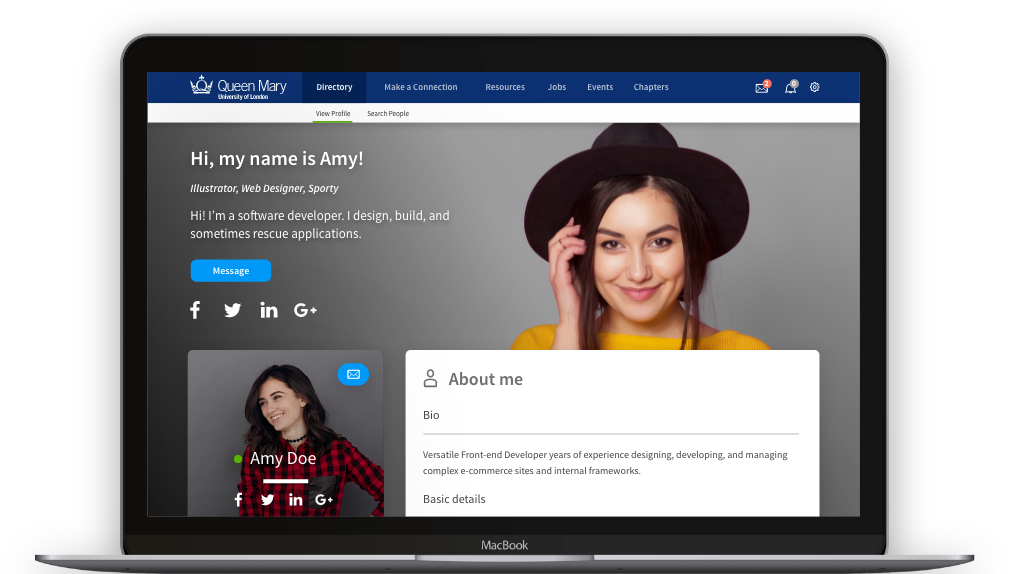
Offering a well-planned online directory is necessary to achieve this. The directory should clearly display the important information of each member to make it easy to connect with the right person.
The directory should also be categorized in a way that makes it easy for members to navigate and find people within the right niche or area of specialization.
Using a well-organized directory will make the most extensive global communities much easier to use. This plays an enormous role in effective community building and overall user experience.

5. Be Specific About Local Markets
A key part of community building is finding and attracting new members. If you’re sharing content and marketing materials to grow your global community, make sure your campaigns are specific to local markets.
Yes, your global community may share a common theme and interest, but the different members will relate better to localized content. Being specific about different markets, time zones, and their nuances will help you to make a greater global impact.
Carefully consider your target audience, what their preferences might be, and what kind of content will appeal to them. Try to find the right blend of global appeal and localization.

6. Create Sub Communities
One of the best community-building tactics is to make your community as specific as possible. Instead of only covering one broad community topic, try to break this down into various subtopics.
Chances are, people will join your community with the aim of finding a specific area of information and connecting with specific individuals within that area. By making it easy for them and creating that space, you’ll be able to attract more global members and improve engagement.
Doing this diversifies your global community, makes the community easier to navigate, and helps your members find the information they need more easily. If members are only interested in a specific area of information, they will be able to access and find this information whenever they need it, instead of scrolling through large amounts of unrelated information.

7. Add As Much Value As Possible
This is essential. If you want to focus on community building that works, then you need to make your community as valuable as possible. Attracting and retaining a global community can be tricky because community members have so many different options available. By far, the most important thing is to make sure your community offers members adequate value.
Some of the best ways to spread value to any global community involve sharing valuable content (like videos and articles), hosting events that facilitate facilitating networking and inviting a guest speaker who will attract a wide audience.
Another suggestion of how you could add value is to introduce a mentorship program.
8. Make It Easy To Connect
One of the most beneficial things about technology today is that it allows for easy remote, global connections.
Thus, your main focus should be on community building on a platform that facilitates easy connections and communications. The more options members have to connect, build relationships, chat with each other, and share content, the more engaged they will be.
Also focus on getting the global community involved, as opposed to a more one-way information flow. The more you embrace collaboration and community engagement, the more effectively you will be able to build a strong global community.
Conclusion
There are many approaches you can take when it comes to community building. By focusing on using the right community engagement platform and making this easily accessible to a global audience, you can easily develop a strong international community.
Physical separation shouldn’t stop communities from collaborating, connecting, and developing strong networks. These days, global communities are more prominent than ever before. With the right approach, building and maintaining highly engaged global communities is more accessible and realistic for institutions and individuals looking to network and form lasting bonds.
Why not get in touch today to see how we can help grow your global community?
The post Global Community Building: The Ultimate How-To Guide appeared first on Aluminati Network Group.
]]>The post How To Increase Community Engagement appeared first on Aluminati Network Group.
]]>The aim of community engagement is to get your community members actively and consistently involved in the community. Increasing and maintaining membership is one of the most important aspects of building any kind of community. This is because engagement directly impacts the overall success of the community.
Community engagement requires substantial effort from your institution or organization, and with the right tactics, this can be easy to achieve.
Follow this guide to learn more about community engagement, including the most effective strategies for building an engaged community.
Find out how Aluminate Community Builder can help you build your community.
Why is Community Engagement Important?
Simply put, the more community engagement you develop, the more interest you will gain for your organization. By using strategies to boost engagement, communities become more valuable and members can get more from their participation.
This in turn helps to attract more members and grow your community even further. It also helps you to build a community with greater levels of retention.

Community Engagement Strategies
Here are seven of the most effective strategies you can use to achieve higher levels of engagement:
1. Use a Platform that Allows for Participation
The first essential step is to use an open platform that allows community members to post and interact with each other. This means more active participation, more user-generated content, and greater community engagement.
One of the keys to building a successful community is making sure the community platform is convenient and easy to navigate. Use an online platform that members can easily access. Ensure that all the necessary tools, like communication or connection tools, are available on the platform.

The platform should be easily accessible from all devices, easy to navigate and store all important information in one place.
Aluminate is a great example of such a platform, as members can easily connect through a simple directory, and access a safe space to build relationships. This also makes it easier for more members to join. The more members that join the community the more value the community offers.

2. Embrace Interaction
Communities shouldn’t only be focused on the organization developing relationships with its members. Instead, members should be able to easily interact and connect with each other. This is essential for high levels of engagement.
So, make sure that your online community platform allows for convenient networking, messaging, and interactivity. The more connected community members are with each other, the more engaged the community will be.

3. User-Generated Content
This refers to any content that is shared on your platform (e.g. An image, video, or general post) by members of the community. This is a fantastic aspect of building a community as it encourages natural engagement between community members, and attracts new members.

4. Share Valuable Content
Building an engaged community is only possible if community members get real value out of it. Without this, you may struggle to gain interest. One of the best ways to provide value to your members is to regularly share valuable content and ask for feedback.
This could include anything from live events and webinars to helpful articles and videos. It’s really all about understanding your audience and offering them innovative content that sparks their interest and entices them to share.

5. Welcome New Members
Making new members feel welcome from the start will help you increase engagement. As soon as a new member joins, it is suggested that you send them a welcome email, a welcome video, or some kind of friendly, helpful content.
This creates an instant connection, makes them feel like they are a part of the community, and inspires them to dive into your community and get engaged with other members.
By providing a positive experience straight off the bat, new members are more likely to become more engaged and spread more positive feedback about the community. This will also help with attracting new members. Of course, having greater levels of member participation will also result in higher engagement.

6. Be Responsive
Boosting community engagement starts with you. In order to get your members engaged, make sure that your organization is highly responsive. This can be achieved by ensuring that questions are answered within a reasonable timeframe.
Also, you should engage with members on any content shared. The more engaged your organization is with members, the more engagement you can expect in return.

7. Refine Your Community
Refining your community entails offering subgroups within your community. This is an effective way to help members find more relevant places to connect.
You may have a broad community, but within this, there could be many areas to cover different interests. The more relevant sub-groups you can offer members, the more opportunities you’re providing for engagement.
To achieve this, look at the types of conversations members are having, and see if there are any common topics that could be a sub-community on their own.
In many cases, members join communities in the hopes of finding very specific areas of information within that community. Subgroups will help them to achieve this. It also makes your community easier to navigate, helping members make the right strategic connections.
Summary
The more people participate and contribute to your community, the more successful your community will be overall. Encouraging and sustaining engagement is essential for any type of community. It all starts with the right online community platform and applying the right community engagement strategies from the start.
As long as the members of your community gain value, you can expect to achieve high levels of engagement. If you want to build your online management platform, or you require an alumni engagement software, reach out to one of our experts.
Why not get in touch with our team today to see how we can help grow your community engagement?
The post How To Increase Community Engagement appeared first on Aluminati Network Group.
]]>The post The Impact Of The Great Resignation On Your Organization appeared first on Aluminati Network Group.
]]>The Great Resignation is not just a buzzword or trending idea – it’s a very real occurrence that doesn’t seem to be slowing down. As an organization, it’s important to understand how the Great Resignation is developing, and what this could mean for your business.
Before you start worrying about losing your entire workforce, let’s take a step back. The Great Resignation doesn’t necessarily mean all of your employees are ready to quit. However, it may mean that your organization should consider new strategies, such as an alumni community platform, to improve retention and career satisfaction.
We’ll explore how you can do this in our guide below.

The Great Resignation: An Overview
The Great Resignation is the phenomenon where mass numbers of workers are leaving their jobs as Covid ends and life returns to a “new normal”. A record number of employees have left their jobs since early 2021.
In fact, in January 2022 alone, more than 4.3 million employees quit their jobs in the US. This shift results from a ripple effect of the pandemic, where professionals are re-evaluating their careers and leaving their jobs in enormous numbers. These resignation rates are the highest among mid-career employees in the technology and healthcare sectors.
FREE GUIDE
The Financial Imperative for a Corporate Alumni Management Program
Your essential guide to leveraging value from your corporate alumni network.
There is a high demand for workers in the US. The most recent report from the US Bureau of Labor Statistics shows a clear job overage, where there are over 5 million more open jobs than there are unemployed people.
While there are many different factors and theories around why the Great Resignation has taken place, the bottom line is this: there are not enough willing workers available.
It is important for businesses to understand the effect that this could have, and know how to respond to it.

What Does the Great Resignation Mean for Your Organization?
The Great Resignation revealed the trend that an enormous percentage of employed people are actively looking for a new job or career path. As a business, this can be scary. The last thing you want is for your workforce to suddenly disappear, without the ability to find new employees.
However, instead of looking at the Great Resignation as a “resignation” trend, you can think of this movement as the “great reshuffle”. Employees aren’t just leaving their jobs, they are reshuffling themselves into better positions that align more closely with their career and life/balance goals.
Organizations should look at the Great Resignation from this perspective. Instead of worrying about jobs disappearing, consider how you can reshuffle your organization to better match employees’ interests.

With this perspective, the Great Resignation could impact your organization by changing roles and departments. Instead of losing employees, you may have to open up new roles and opportunities, focus on upskilling and training, and offer new programs to help employees find more job satisfaction.
[activecampaign form=5]
This is an opportunity for you to take a closer look at the kind of opportunities that employees currently have available.
Whether your organization is experiencing the Great Resignation or not, it’s still important to focus on job retention and improving workplace satisfaction. This is the only way to limit the risk and possible impact of the Great Resignation on your organization.

How to Improve Retention During the Great Resignation
The Great Resignation can affect any business in any industry, which can be a nerve-wracking thought. However, if you want to limit the chances of the Great Resignation hitting your organization, here are a few strategies you can take to improve employee retention.

Provide More Value to Employees
One of the biggest reasons why employees are leaving their jobs is because they feel they aren’t getting enough value from their position. Putting aside things like job perks and work from home policies, employees want to know that their position aligns with their personal values and career goals.
Employees don’t want to just work for a company. Instead, they want to generate value and have their job add more value to their own life and career development. So, as an organization, you need to think about how you can create this value for employees.
One way to do this would be to offer improved career development opportunities, like mentorship programs. By creating an engaged professional community and network, your organization can offer more value to employees.

Increase Workplace Flexibility
The Great Resignation evolved out of the pandemic. The entire world changed, and employees expect their working environments to mirror this change.
In today’s world, organizations need to deliver on offering greater levels of flexibility. Things like work-from-home policies and flexible work hours are more important than ever.
A major driving force behind the great resignation is that employees want to increase their job satisfaction, and a lot of this comes down to workplace flexibility.

Create Deeper Connections With Employees
Many employees are leaving their jobs because they don’t feel a genuine human connection in their workplace.
Instead of simply working for a company, employees want to feel valued, and they want to know that their job involves human relationships and growth opportunities.
Companies that are able to create more meaningful communities and networks are able to boost employee satisfaction to help increase retention. A great way to do this is through an alumni network.
Conclusion
The Great Resignation isn’t something to be afraid of. It just signals a new era of work, where employees are approaching their careers with different mindsets. As an organization, it’s important to be able to respond to this movement effectively.
By offering employees real value in their work environments, using the right digital platforms, and by that we mean our very own alumni management platform; and responding to the ever-changing desires of employees, organizations can improve retention. This will help you combat the possible effects of the Great Resignation. We also offer alumni engagement software in the education sector too!
The post The Impact Of The Great Resignation On Your Organization appeared first on Aluminati Network Group.
]]>