The post Virtual Alumni Engagement Ideas For Your Network appeared first on Aluminati Network Group.
]]>The key to any successful alumni network is keeping your alumni community engaged.
While this is traditionally done through events, you might want to consider some virtual alumni engagement ideas. Many of your alumni probably already live their lives online and remotely, so they might not be interested in in-person events.
Virtual engagement ideas can help you to bring your alumni together, regardless of where they are based in the world. Best of all, virtual engagement ideas are often a lot easier to set up than in-person events.
To help you get started, here are ten of the best virtual alumni engagement ideas for your network.
1. Alumni Quiz
You can facilitate a quiz online through a chat or a poll. This is easy to set up, and it’s also easy for your alumni to engage with – which makes it one of the best virtual alumni engagement ideas.
A good strategy is to run a nostalgic quiz about your institution. You can ask questions based on old pictures of events, your institution, faculty, and more. Alternatively, you can run quizzes about interesting facts about certain industries, or you can base them on current affairs.

2. Virtual Speaking Event
One of the most popular alumni engagement strategies is a speaking event. It’s possible to take these events and run them in an online format. This makes the event completely accessible to your virtual alumni network.
Try to find an interesting or inspiring speaker who will pull in a crowd. This speaker could be a successful or interesting member of your alumni. Or they could be an established public speaker, a celebrity, an accomplished business person, or anyone else who might entice your community to sign-up.
Ensure to include time for a live question and answer session to get your alumni actively participating. This creates more engagement and enjoyment from the virtual event.

3. Webinar Series
A webinar series is one of the best ongoing virtual alumni engagement ideas. Much like a speaking event, this involves finding guests for each webinar. However, these guests don’t necessarily have to be as “high profile” as your once-off speaking event. These guests can include your alumni, and/or anyone with a particular area of expertise or interest.
You can run these events weekly or monthly to help maintain consistent engagement. They’re easy to manage on a platform like Zoom, where attendees can join and contribute to the conversation virtually.
An effective webinar series should cover a wide range of topics. As long as these topics are valuable to your alumni network, you have a lot of freedom to choose different types of speakers and host different kinds of conversations.

4. Virtual Scavenger Hunt
Everyone loves a scavenger hunt. They’re fun, they require some brain power, and they’re an excellent team-building exercise. When it comes to virtual alumni engagement ideas, scavenger hunts are one of the best ways to bring your alumni together and get them interacting with each other.
There are plenty of virtual scavenger hunt websites out there – many of them free. This makes it easy to organize and run these events. You can even run these events as an ongoing series with a team leaderboard.
While speaking events and webinars are often one-sided, scavenger hunts are more conversational and engaging. This makes them an excellent social experience in a virtual setting.

5. Online Games
If scavenger hunts aren’t appealing to your alumni network, there are many online games that you could use for engagement events. This includes anything from drawing and picture games to Balderdash, general knowledge games, and more.
Games events are a fun way to get your disconnected alumni engaging with each other and with your organization. They require minimal effort to organize, and they can result in a far more active alumni network.
And while your alumni network plays these games, it provides an excellent opportunity for conversation and networking.

6. Mentorship Programs
Facilitating mentorship programs is one of the most valuable alumni engagement strategies. You can invite willing participants from your older and younger alumni networks to act as mentors and mentees.
Older alumni can share their knowledge and experience, which will add a great deal of value to younger alumni.
This can all be done online through virtual meetings. This makes mentorship programs an excellent way to keep your alumni engaged, add value and build a stronger community.
Many fresh graduates and young professionals are interested in joining mentorship programs. By facilitating a mentorship opportunity with your alumni, you can provide an excellent incentive for more people to join and engage with your alumni program.

7. Development Sessions
By introducing professional development sessions, you can run various development events, such as workshops and masterclasses taught by experienced and successful alumni. This will get fresh graduates and young alumni interested and active.
These kinds of development sessions can follow all kinds of themes, as long as they provide actionable takeaways to assist alumni with professional development.
You could run basic how-to short courses to expand on alumni’s knowledge, provide business strategies, and any other kind of development session that makes sense for your alumni.

8. Video Lessons
Virtual alumni engagement ideas don’t all have to be live and in real-time. One great tactic is to create video lessons that you can share with your alumni. Your institution can either create a series of lessons, or you can ask alumni to submit their own video lessons on certain topics.
These videos can be about any topic, as long as they are educational in some way. Giving your alumni exclusive access to these lessons is a great way to gain more engagement and inspire more people to join your alumni program.

9. Virtual Lunches
Virtual gatherings like breakfast or lunch should have some kind of purpose so that they’re not just a group of people eating at their screens. You could organize a workshop, a presentation, or an industry-specific networking event. Whatever the case, adding lunch to the occasion can be an excellent ice breaker.

10. Photo Contests
A fun way to engage alumni online is to run a regular photo contest. Ask your alumni to submit photos of your institution, their time on campus, special events, or more. You could also run a similar contest, where you ask alumni to caption a photo that you post.
This is a great way to get your alumni feeling nostalgic, and the content that your alumni share could bring about some great conversations and memories with other alumni.

Conclusion
Implementing new and innovative virtual alumni engagement ideas is always a good move in today’s digital world, especially when your community is spread out on a global scale.
Creating virtual events makes engagement more accessible for a greater portion of your alumni. This could help you boost overall engagement in a big way.
Of course, the best strategy is to combine traditional alumni engagement strategies with virtual alumni engagement ideas. This will help you offer a more comprehensive alumni engagement strategy that appeals to everyone.
Why not find out how Aluminati can help grow your online networks?
[activecampaign form=1]
The post Virtual Alumni Engagement Ideas For Your Network appeared first on Aluminati Network Group.
]]>The post Employee Offboarding: Why It Matters appeared first on Aluminati Network Group.
]]>Employee offboarding is the process of successfully separating from an employee once their employment has ended (due to resignation, termination, or retirement).
Employee offboarding forms a critical part of an employee’s lifecycle. A proper offboarding process ensures employees have a pleasant experience from the start to the end of their time with your organization.
A thorough onboarding approach will improve the way your company operates, it will improve the perception of your brand, and it can help you avoid all kinds of speedbumps when transitioning a new employee.
In this guide, we’ll explore exactly what employee offboarding is and why it is important.

FREE GUIDE
The Financial Imperative for a Corporate Alumni Management Program
Your essential guide to leveraging value from your corporate alumni network.
What Is Employee Offboarding?
Employee offboarding covers the separation process when an employee leaves a company. This technique ensures that the employee follows through with all of the necessary leaving procedures.
If done properly, the company should be able to continue operating as usual after the employee leaves.
Many companies focus more on employee onboarding than offboarding. Onboarding starts off with the relationship between an employee and a company, so it’s often seen as more important. However, employee offboarding is still a vital part of the overall employee lifecycle.
By understanding the employee lifecycle, and improving each process (including offboarding), companies can improve their ROI with new hires, increase employee retention, and boost employee satisfaction.
Ending on a positive note will leave you with a strong alumni relationship, which could equate to rehires in the future, or a brand advocate for your company.

What Does Employee Offboarding Include?
Employee offboarding ensures that the employee departs without leaving any open ends in their role. Any replacement employees should be prepared for covering their role, and any tasks or processes from the departing employee should be handed over.
Some of the main processes involved in employee offboarding include:
- Conducting exit interviews
- Removing the employee from the payroll
- Transferring the employee’s responsibilities and knowledge to their replacement
- Deactivating any software tools, email addresses, and profiles that the employee has with the company
- Returning any equipment to the company
- Approval of workflow removal of the employee
- Updating the company information and website to remove the employee
Using an employee experience platform can assist with these processes, making it easier to communicate and share knowledge and job functions.

Why Is Employee Offboarding Important?
Employee offboarding serves a range of important functions for a company. Here are some of the main benefits.
[activecampaign form=5]
1. Keeps Operations Running Smoothly
First and foremost, employee offboarding is all about making sure the company continues to operate smoothly after the employee leaves. This is achieved by transferring all of their tasks and responsibilities to other employees.
Ensuring that the leaving employee has also shared all of their processes, knowledge, and accesses are crucial.
This means there are no loose ends after the employee leaves, so the company can operate as usual without any interruptions. The last thing you want is to reach out to old employees, weeks after they have left, asking for passwords, access to spreadsheets, or help with business processes.

2. Improves Employee Training
If the leaving employee has a replacement, an important part of employee offboarding is training the replacement for the role. The leaving employee can do a proper handover by introducing the replacement to all of the existing processes and tasks involved in the role.
This is far more efficient than having replacement employees figure things out themselves.

3. Exit Interviews Provide Valuable Insights
Another key part of employee offboarding is conducting an exit interview. This helps HR to understand how the leaving employee felt about their role and their team; why they might have chosen another job, and/or why they are leaving the company in general.
Conducting an exit interview provides HR with valuable insights to help them improve employee retention and job satisfaction.

4. Improves The Employee’s Perception Of Your Company
A smooth and professional employee offboarding process can play a big role in how employees advocate for your business. Having employees leave your company on a good note is important, as this helps them spread the good word about your business. If they leave on bad terms, this could go in the opposite direction. Especially if they write a negative review on platforms like Glassdoor.
Your employee offboarding process gives you an opportunity to turn things around with employees and help them leave as brand advocates. This can result in them recommending your business, which helps you develop stronger brand awareness.

5. Helps Develop Alumni Networks
As part of the employee offboarding process, you can encourage departing employees to join your corporate alumni program. If they leave on good terms, then they will likely become engaged and active members of your community network.
This can have many advantages for a business. As mentioned, it helps you get brand advocates, It can help with referrals for future hires, and it could potentially help you to attract old employees back to your organization.

6. Greater Employee Confidence
Proper offboarding shows employees that you care about their experience. This instils more confidence in current employees, and it can help to develop more loyalty.
This creates an overall healthier, and more positive culture and work environment.
7. Enhances Security
Employees have access to a lot of important data. This could be the business’s data or customer data. Either way, you need to ensure this data is carefully controlled when an employee leaves.
A proper employee offboarding process reduces the chances of a data breach. It can also maintain important security compliance for certain types of organizations, such as SOC 2.
Keeping strict controls around data access during offboarding will help your company avoid possible security threats while improving customer trust.
Conclusion
It’s incredibly important to follow through with a proper offboarding process when an employee leaves a company.
This has many advantages for the company, for its customers, the leaving employee, and existing employees.
By ending the employee lifecycle thoughtfully, you will be able to improve your alumni network, strengthen employee relations, and avoid any unwanted hiccups when transitioning a new person into the role.
The main idea is that no employee should leave on unfavourable terms, or with any open ends. Proper employee offboarding keeps the organization running smoothly, and it ensures new and existing employees can easily adapt when the departing employee is gone. This is vital for the ongoing success of any company.
Get in touch today to see how we can help your organisation develop an effective offboarding strategy.
[activecampaign form=1]
The post Employee Offboarding: Why It Matters appeared first on Aluminati Network Group.
]]>The post A Comprehensive Guide To Mentorship In Your Organisation appeared first on Aluminati Network Group.
]]>Investing in a mentorship program is one of the best ways to facilitate learning and self-improvement in your organisation. Employees can find great rewards in a mentorship program, and it will help them to become more valuable assets to your business.
Mentorship remains one of the best approaches for professional development, and it’s something that any type of business can introduce.
Follow this guide for everything you need to know about creating a successful mentorship program in your business.
Find out how Aluminate Community Builder can help you build your community.

What is a Business Mentorship Program?
Mentorship programs provide an opportunity for new hires, or individuals starting their careers, to connect with experienced mentors. The mentors help guide them along their new professional path.
Mentorship programs provide an excellent opportunity to improve professional growth. When organizations set up effective mentorship programs, the programs can also improve employee retention while creating a more fulfilling work environment.
Mentorship in a business should follow a clearly structured program that offers guidance for different stages and scenarios within a career path. This helps new employees develop faster and grow more easily within the company.

What Does a Mentor Do?
Mentorship relationships are informal ways to share valuable guidance and knowledge. A mentor is a seasoned professional who shares their experience with a younger mentee.
As young professionals navigate their careers, having a direct line to an experienced person who has already succeeded in such a role can be incredibly valuable. The mentor can assist the mentee along their journey, sharing advice and providing an insider perspective.
Mentors also provide valuable bigger-picture insights and can help mentees better understand the scope and opportunities of their careers.

5 Steps to Starting a Mentorship Program in Your Business
To effectively apply mentorship in your business, you will need to organize the mentorship program carefully from the start.
Here are five steps to take to build and implement a successful mentorship program.

1. Define Your Goals
The first step is to understand the purpose of the mentorship program. This could be to improve low employee engagement, balance unequal leadership positions, stop talented new hires from leaving, or more. Understanding why you need a mentorship program is the first essential step.
This will let you design a mentorship program that offers employees the right incentives. For example, employees might join because it could help fast-track their way to a promotion, or develop their leadership qualities and knowledge.
You can then set your goals, and choose relevant KPIs that will be used to measure the success of the program.
Go back to the purpose of the program, and identify what metrics you can use to monitor its success.

2. Design the Mentoring Program
Now that you have determined why the mentorship program will exist, it’s time to put it together. This step involves outlining various details around the program, like the sign-up process, how many spaces are available, how inclusive the program is, and so on.
Consider all of the details and specifics that will go into the program. Think about how mentors and mentees will be matched, how sign-ups will be encouraged, and how long mentorship relationships will last.
The best approach is to use an online community platform as a space to facilitate your mentorship program.
The right platform will allow relevant mentors and mentees to connect, communicate, and easily develop relationships. Offering an online mentoring program is important in today’s digital world, and with a platform like Aluminate, you can achieve greater mentorship success more easily.
3. Onboarding
The next step is to onboard mentors and mentees. You want the program to get high participation rates for it to be a success, thus there are a few important considerations to take note of at this stage:
- Make sure the benefits of the mentorship program are clearly outlined
- Make the program as easy as possible to join, and ensure it is not overly time-consuming
- Provide plenty of resources to mentors for training and preparing for the program
- Try to get the most influential people in your business involved in the program first. This will encourage more signups
Again, the most effective way to facilitate all of this is to use a dedicated online platform to build your mentorship networks. This takes a great deal of time and effort out of mentorship activities, which will encourage greater levels of participation.

4. Connecting Mentors and Mentees
One of the most important parts of running any mentorship program is making sure the right mentors and mentees connect with each other. This can either be done manually or by the mentorship program organizers.
Letting mentors and mentees connect themselves is generally a good idea because it ensures participants create the relationships they want to be a part of. This is where having a well-organized online directory and community platform is important.
The platform will consider all of the participant’s skills, interests, and background information on the profiles to help them find and connect with the right mentors and mentees.
Manual matching can often result in poorly matched mentorship relationships, which is a major cause of unsuccessful mentorship programs.

5. Providing Training
Everything is now in place for the mentorship program, but mentors need to be properly prepared for the program to be a success. Your mentorship program should include training resources to help mentors understand their expectations and add maximum value.
An important part of mentorship programs is maintaining momentum. Make sure the program is well structured, that it adds value, and that there is no confusion within the mentorship relationships. This will help create sustained mentorship programs that add more benefits.
Summary
Creating a mentorship program for your business offers many valuable opportunities. It can help employees to grow faster, develop their professional skills more intensely, and achieve a greater sense of fulfillment in their careers.
By following the steps above and using the right online platform, you can develop a mentorship program that offers clear benefits for your business.
The post A Comprehensive Guide To Mentorship In Your Organisation appeared first on Aluminati Network Group.
]]>The post How To Optimize Your Online Mentorship Programs appeared first on Aluminati Network Group.
]]>Online mentorship is a highly effective way to develop talent and create valuable relationships. In today’s age, there are excellent opportunities for you to set up an online mentorship program for your institution. This can help you increase productivity, share a wealth of knowledge, and develop powerful networks.
Navigating these online mentorship programs can be tricky though. How do you set up online mentorship programs that add maximum value? What should you do to make sure your online mentorship program is successful?
We’ll uncover seven important strategies that can optimize an online mentoring program.
Find out how Aluminate Community Builder can help you build your community.

Use the Right Online Platform
Online mentorship relies on the use of technology. Without it, you simply can’t connect with mentors and mentees effectively.
There are many different options for online mentorship platforms. This could include anything from email to social media, video conferencing tools, and dedicated networking platforms. If you want to optimize your online mentorship program, the first place to start is to use the right online platform.
This should be a peer-to-peer mentoring network that makes it easy for mentors and mentees to connect. The platform should include powerful networking features, easy communication tools, and convenient directories. The aim of the platform should be to provide a seamless process for mentors and mentees to connect with each other and develop relationships.
The community platform you use to achieve this should provide a user-friendly experience to keep members coming back. Without starting with a great online community and networking platform, keeping online mentoring programs engaging will be a major challenge.
Clarify the Online Mentorship Program
It’s important to make the goals and expectations of the online mentorship program clear, to optimize the way members approach mentorship opportunities. Highlighting the expectations will also encourage more people to join as there is no ambiguity.
Both mentors and mentees should know exactly what is expected of them and what kind of commitments the relationship could involve. This includes things like the duration and frequency of online mentoring sessions, or any pre-session work required.
Create an action plan around these details and include them when promoting the online mentorship program. The more clarity you offer from the start, the more efficiently the program will operate.

Allow for Self Matching
Possibly the most critical task of running an online mentorship program is matching up mentors and mentees effectively. This directly influences the success or failure of these programs.
Quite simply, if the online mentorship match is not appropriate, the program will lack value.
One of the best ways to ensure the right online mentorship matches are made is to offer self-matching. Instead of relying only on algorithms that match mentors and mentees, creating an open community, or directory, where participants can find and connect with each other is important.
To achieve this, participants will need a detailed profile that clearly explains their position, achievements, and showcases what they have to offer.
Giving participants the opportunity to get actively involved in the matching process generally results in more beneficial and interesting online mentorship relationships.

Make the Online Mentorship Program Specific
Online Mentorship is most effective when the programs are focused on very specific skills and areas of development. The more specific you are about what skills the online mentorship program covers, the more focused the online mentorship materials and training will be.
This also helps more relevant mentors and mentees to connect with each other.
The best way to achieve this is to run surveys and skills assessments to understand which specific skills you want the online mentorship program to focus on. The more defined these skills are, the more value the program will be able to offer.

Provide Mentoring Support Systems
Mentoring relationships don’t just flourish on their own. No matter how skilled and experienced mentors are, they may still get lost when it comes to building relationships and handling certain queries and questions.
Make sure that your online mentorship programs provide ongoing support and training materials for mentoring. This should include training resources, refreshers, and creating open peer networks where mentors can connect with other mentors.
The more support there is available, the more effective and empowering the online mentorship program will be.

Offer Clear Online Mentorship Guidelines
To improve productivity between mentor and mentee pairs, it’s vital to provide clear guidelines for the relationship. Guidelines on things like preferred communication channels, what progress assessment will look like, or how long the program is expected to last will create a program with less confusion.
The online mentorship guidelines should also include the tools involved, the resources available, and anything else that mentors and mentees need to know to develop and strengthen their relationships.

Explore Different Mentorship Formats
The traditional online mentorship approach is through a one-on-one in-person setting. This works well, but there are also many other mentorship formats that you could consider. This could include things like group mentoring, or strictly virtual mentoring relationships.
Offering mentoring programs in different formats appeals to wider groups of people, and opens up new opportunities for those who may not be interested in traditional mentorship formats. This can broaden the appeal of the mentorship program.
When offering different mentorship formats, ensure to highlight clear guidelines, expectations, and clearly defined goals and action plans for each. Whatever kind of mentorship format you’re dealing with, it’s important for participants to know exactly what to expect going in.
Conclusion
Mentorships have been a valuable learning and growth tool for centuries, and the online space only enhances these opportunities. By following the right strategies and using the right platform, developing an effective mentoring program online is easy and highly effective.
No matter the kind of institution or organization, or what skills you want to focus on, online mentorship programs are always an excellent way to enhance development, professional growth and relationships, and opportunities. If you want to build your online management platform, or you require an alumni engagement software, reach out to one of our experts
Get in touch today to see how our team can help grow your mentoring programmes.
The post How To Optimize Your Online Mentorship Programs appeared first on Aluminati Network Group.
]]>The post Knowledge is Power: How One Institution is Using an Online Mentoring Platform to Create an Inclusive Community appeared first on Aluminati Network Group.
]]>Stellenbosch University (SU) is a research-intensive public university in the Western Cape in South Africa. The University is spread over five campuses, with the main campus situated in the picturesque town of Stellenbosch in the heart of the Cape Winelands.
The vision of SU is to be Africa’s leading research-intensive university, globally recognized as excellent, inclusive, and innovative, where knowledge is advanced in service of society. SU is committed to the idea of an inclusive world-class university in and for Africa.
In support of SU’s values of excellence, compassion, and equity, and with a focus on being an employer of choice, various projects support transformation, staff development and academic leadership development.

I sat down with Dr Margaret Orr and Almene Potgieter, both full-time internal leadership coaches at the university. They serve as a resource available to leaders and managers to support their personal and professional effectiveness. As part of their mandate, Margaret and Almene were also involved in the creation of an online mentoring platform – SUNMentor – for all SU staff.
SUNMentor offers a space where individuals can both offer and seek out advice, support, and wisdom across a range of professional and personal challenges. It aims to create an informal mentoring community for generally shared wisdom and experience, while also offering a range of very specific and more formal mentoring programmes where staff can look for a mentor around specific skills or roles. We are thrilled to be part of this journey.

Knowledge is Power
Before the SUNMentor platform, there was no single system in place where a staff member could find a mentor. Although various formal and informal mentoring offers were available, these were hosted on various small platforms, often using spreadsheets and administratively cumbersome manual processes.
Margaret and Almene wanted to bring all these formal and informal mentoring programmes under one roof and extend the mentoring offer to all staff – thereby creating a mentoring community that brought everyone together. This became even more important during the loneliness and isolation of remote working during the recent years of the Covid pandemic.
“Lockdown emphasized the isolation that staff felt, and they did not know who to turn to. We wanted to offer a space where people could feel supported and have a sense of community” – Almene
The way the SUNMentor platform has been conceptualized is that it is open to all staff, a place where people can freely admit when they don’t know something; a place where wisdom is democratized, inclusive and accessible.
“Everyone has something to learn and everyone has something to teach. And sometimes you just need to be able to ask the dumb questions!” – Margaret
Since the pilot launch of the platform, various formal mentoring programmes and discussion groups have been added – with a breadth of scope ranging from psycho-social support to academic career mentoring.

Bespoke training and delivery
Aluminate developed a bespoke training package for Margaret and Almene. This allowed collaborative training sessions with our client support team but also incorporated ‘sandbox testing’ to allow them to streamline the platform build and delivery timeline. They also ran various pilot projects with internal stakeholders and groups.
Margaret and Almene also worked with our in-house consultancy team to develop a bespoke set of KPI metrics and are developing a gradual launch process.
They hope to have the platform open to all staff by mid- 2022. We will be checking in with Margaret and Almene later in 2022 to see how the SU mentoring community and the SUNMentor platform is developing.
If you would like to know more about how our in-house consultancy team can help with your community management, get in touch today for a free strategy session.
Our team will be more than happy to show you how Aluminate Community Builder can help your organization grow and manage your community more effectively. Book a demo today to find out more!
The post Knowledge is Power: How One Institution is Using an Online Mentoring Platform to Create an Inclusive Community appeared first on Aluminati Network Group.
]]>The post The Secret Ingredient to a Successful Mentoring Programme appeared first on Aluminati Network Group.
]]>For our May Creating Connection event, we were joined by Josh Domitrovich, Director of the Center for Career and Professional Development at Clarion University of Pennsylvania, to discuss creating a mentoring programme that increases career readiness using gamification. In his role, Josh serves as a career coach/liaison to approximately 800 students and specialises in mentoring, first destination outcomes, and retention efforts.
Whilst the context of this information is from an educational perspective, these insights can of course be applied to any mentoring programme across many sectors.
Key Objectives
- Understanding the components of mentoring programmes
- Identifying steps to design and implement a mentoring programme
- Examining creative and strategic approaches to increase engagement

The Research
Josh began his research by contacting 10-15 peer colleges and universities nationwide that had a formal mentoring programme. He found that the programme structures varied from informal ‘flash mentoring’ to more formalised partnerships. Josh noted that few were formalised at the school/college or university level. It was also noted that partnerships typically ranged from student-student/faculty/alumni/employer.
There was also a wide range of tools used such as manual matching, CMS and mentoring platforms such as the Aluminate Community Builder, which Josh noted was extremely helpful in providing scalability to a mentoring programme.
However, the main takeaway from his research was that none of the institutions contacted were formally or intentionally preparing their students to be mentored so what Josh did was try to fill a niche in the market by using the technique of gamification.

Gamification
Gamification is the use of game design elements in non-game-like contexts. For example, you may play a game on your phone where you can earn stars or a badge. Taking those game-like elements like a badge and applying them to an area such as career services is said to increase the motivation of individuals.
Josh and his team took this technique and created a four-year initiative called the Return on Education, creating a culture shift where an optional service at the university was embedded inside the curriculum. Josh noted that engagement areas would have typically been seen in the Freshman and Senior year groups, creating a slump in the Sophomore year where engagement decreased.

A few different components were created to remedy this issue. The team created a badging process where students have to participate in a certain number of programmes and services before they can have access to the mentoring programme in the Junior year. The badge being a symbol that students were ready to participate having learned various skills set out in the criteria.

Anatomy of a Badge
Students were given the opportunity to not only choose how they earn their badge but also how they learned these new skills along the way.
The learning options were:
Individual appointments: a great way to meet career coaches to discuss career development needs.
Online professional development series: Learning online, at own pace
Speed sessions: Half-day events designed to expose the student to important professional development details in a fast-paced environment
Professional development day: A one-day event offering access to alumni and employers.
Following this, students were given a range of topics, divided into five categories, with the instruction that they must complete one topic from each of them to earn the badge.
From this process and through research, Josh found that their programme saw an increase in student engagement of around 60%. It was also found that the programme was very attractive to parents of students, who were able to see the outcomes.

Subscribe to receive updates when we publish new and interesting content.
The post The Secret Ingredient to a Successful Mentoring Programme appeared first on Aluminati Network Group.
]]>The post Demonstrating the Value of Alumni Relations appeared first on Aluminati Network Group.
]]>
Alumni are your institution’s biggest stakeholder group and the living embodiment of your institution’s goals. However, whilst maintaining a world-class alumni relations programme is neither easy nor cheap, failing to invest at all in it will make life harder and be more expensive in the long run.
Alumni Relations programmes have very real goals and should be aligned closely with those of your institution. Typical examples include working with alumni to find advocates, expanding employment opportunities, fundraising, increasing student recruitment and more. This particular event discussed how institutions as a sector can demonstrate the impact of their work by sharing best-practices.
The panel were all asked the same question, Why is Alumni Relations Important?
Ian Moore, Head of Alumni Relations and Annual Giving at the Queen’s University in Belfast said that one of the things he is conscious of is that Alumni are the living embodiment of a university’s product and that whilst knowledge is not something you can see, you can see it being used and the impact they have on the world around them. Alumni are constantly exposing the values that have been instilled in them by their time at university and their success reflects on the institution. Universities need to know who their alumni are, where they are, and what they are doing.
Holly Peterson, Head of Constituency Engagement at the University of London, UK noted that the two main things that an institution produces are alumni and research. Whilst research and fundraising programmes can have more obvious routes to success, alumni relations goals are not as clear cut. Holly suggested that universities have the potential to produce thoughtful humans who use their knowledge to make the world a better place. She also noted that lots of studies have shown that people who receive a university education are more civilly engaged. It is important to see how university affects alumni by staying in touch with them and understanding how they are taking their work into the world.
Any Alumni Relations department must ask themselves what their institution’s goals are, what their alumni engagement strategy is, and how can their alumni help the institution achieve its mission? Many programmes will focus on alumni employability and securing university places for school-leavers. Our recent study, Mentoring Improves the Employability of University Graduates shows how important alumni-student mentoring programmes can be in helping with this goal.
..
Suggestions for ways to increase alumni engagement were to implement regular communication as to what the university is doing with news and upcoming events. It was also suggested that events should be seen as an opportunity to share information with an institution’s alumni base and perhaps prompt further engagement from that point. Events are also a good opportunity to identify notable alumni and make them donors, volunteers or ambassadors for an institution. Virtual events have also become a valuable resource for increasing geographical engagement.
Jimmy Buck, Chief Advancement Officer at Deakin University, Australia, noted that alumni relations programmes were not meant to merely babysit but should focus more on the role of a power broker.
Measurements and KPIs
What measures should we use to demonstrate effectiveness to university leaders and senior stakeholders?
Ian Moore stated that the world of alumni relations is changing and that changes are also occurring in the way alumni relations departments operate.
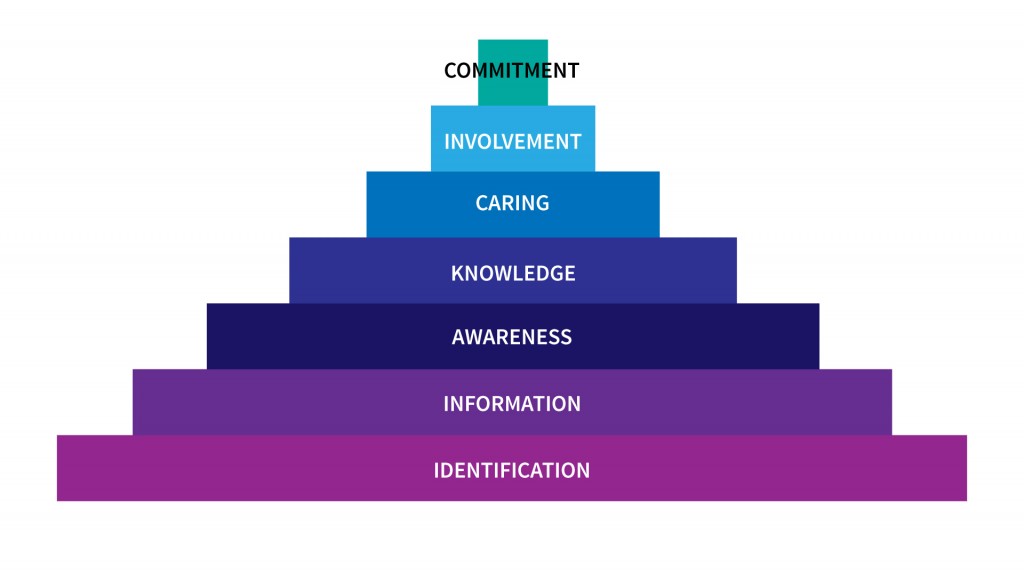
The old model of engagement is linear and makes assumptions that people are the same. Ian argues that people are more complex than this model allows for and that the best way to measure engagement and relationships is to focus more on impact. “Impact is King”, he stated.
How an institution’s goals and bottom-line is supported by these programmes is a crucial measurement of success. It was also noted that it was important to compare engagement levels with those of similar institutions.
Holly Peterson stated that it is also very important to maintain transparency with your alumni as to why you are doing what you are doing. That way, they will be more satisfied with their experience and in turn, be more likely to engage and advocate.
Jimmy Buck noted that pyramid models are good at showing trajectory but when it comes to individual prospects, alumni engagement pathways can go in many directions, much like a tube map. There are a number of ways alumni can add value to an institution, yet no concrete way of measuring this. Alumni relations are constantly evolving and by the time universities have figured out what works, things have moved on.
However, the panel all agreed on the importance of collaboration with other departments within an institution, for example communicating with fundraising departments and student affairs to make sure that everyone is working towards key goals.
As Ian stated at the conference, “Impact is King”.
Aluminati was proud to sponsor the Introduction to Advancement Leadership conference hosted by CASE. Held in November and December 2020, it featured talks covering various topics, with panels of industry leaders and experts leading the conversations. Be sure to check out our previous article in this series Your International Alumni Really Matter – Here’s Why.
Find out how Aluminati can help supercharge the impact of your institution’s alumni relations programmes.
The post Demonstrating the Value of Alumni Relations appeared first on Aluminati Network Group.
]]>The post How to Increase Your Online Community Engagement appeared first on Aluminati Network Group.
]]>
Maria Gutierrez and Johana Canda-Fiserova, Platform Strategy Consultants here at Aluminati hosted the session and began by asking the question, What are the most important metrics to your institution for measuring the success of your alumni engagement programmes?
Maybe you quickly thought of metrics such as the number of registered users, social media engagement and amount of page views. But these metrics are more so used to indicate the size of an online community… they are just the tip of the iceberg when it comes to data analysis.
We know that online platforms (like our Aluminate Community Builder) generate a huge amount of data. At Aluminati, we love processing and analyzing data sets, but we realize that it might seem like a daunting task…especially if you don’t have a dedicated analyst! We’ll share four of our best tips and tactics to make strategic, data-based decisions. Even without a data analyst on staff, you can use these tactics to bolster (or challenge!) your current understanding of your community.
1. Profile Pictures

The first key data set that institutions can consider is user profile pictures. Research into Aluminate clients has shown that on average, 42% of a platform’s population have a profile picture, with the highest performing having approximately 53%. Maria noted that the importance of profile pictures in a community is key and that users who have one become much more approachable and open to further engagement.
2. Employment Records

The research carried out by Maria and Johana revealed that on average, 48% of Aluminate clients total platform populations had completed employment profiles. The best performing client saw 90% of their users complete employment records. Visible employment history can make a user appear much more genuine and is an important factor in measuring the integrity of the user data. Maria noted that employment records are also a gold mine for an institution as it enables a university to identify and target users for fundraising programmes, speaking engagements and other campaigns where alumni can be a benefit.
3. Active Mentoring Relationships

Most institutions expect a high percentage of mentoring engagement on their platforms but research revealed that on average, only 2.72% of users were actively engaged, with the highest being just 3.2%. However, mentoring is such an important factor that even such low numbers can mean a great deal for an institution. For example, alumni that are actively engaged in an institution’s mentoring programmes are more likely to become donors.
4. Age Distribution

Unsurprisingly, the largest data subset for age distribution was the 22 – 30 age range. It was noted that most institutions had not launched any target campaigns aimed at bringing older alumni to the platform. This is based on the assumption that older generations would be less likely to want to engage with an institution in an online environment. However, this is not always the case and older age groups can indeed be encouraged to engage online, for example, through ‘nostalgia’ campaigns. It is important to define different strategies for each age group.
A monthly review can help an institution stay on top of the large amount of data that can be collected, and we can advise Aluminate users on how best to export and analyse their own data in an online session with our consultants.
Find out how Aluminati can help supercharge your institution’s alumni relations programmes.
The post How to Increase Your Online Community Engagement appeared first on Aluminati Network Group.
]]>The post How to Support Your Alumni Journey appeared first on Aluminati Network Group.
]]>
The second conference in the series discussed the journey that alumni take and how institutions might best support them and their students, highlighting the value of alumni relations programmes in the education sector.
Christine Fairchild, Director of Alumni Relations at the University of Oxford, UK suggested that the transition from student to alumni really marked the beginning of the alumni relationship. However, she also noted that students can also begin receiving advice, mentoring and support before they even become students at the university. She described it as “a lovely slow build to this relationship journey”.
Students are more aware now that they are joining a whole community. A community that will be with them for life.
Erica Arroyo, Associate Vice President of Engagement at the University of Miami, USA initially had only one member of staff at the university who was tasked with administrating the student to alumni transition period. Now she has a Family Relations Team as well as an Annual Giving Team to assist with this transition. These teams also have a great relationship with the university’s careers department as well as Student Affairs. This means that Erica and her teams can maintain alignment across campus and attend to the needs of their alumni more effectively.
Erica noted that a lot of the university’s students also had very strong social media circles. This means that they had the potential to be great ambassadors for the university and its Alumni relations programmes. The transition teams identify these students early on in their journey.
Other strategies deployed by the University of Miami were creating alumni ‘personas’ and creating events and engaging content to suit them. One such strategy was that of targeting ‘legacy alumni’. Legacy alumni are the children and grandchildren of current university alumni. This has proved to be a great way of strengthening the relationship between alumni families and the university. Getting children interested in the institution with various touchpoints such as guided tours and events showed that an affinity with the institution was built from a young age. However, focussing on alumni ‘personas’ was not the only solution.
It was noted that companies like Amazon were using data to generate a highly personalised approach to their customers and this is a model that, if applied to an institutional framework, would prove to be a much more effective relationship-building strategy. Whilst these strategies work well in the United States, the United Kingdom tends to approach alumni relations differently.
UK universities, more often than not, will try to attract people from more disadvantaged backgrounds and therefore group alumni associations around that particular demographic.
Miami University’s alumni transition teams are currently engaging with students over the entire course of their university life and Erica noted that the students almost become “Alumni in training”. They have introduced various different programmes throughout their university life to ensure rounded engagement. Unfortunately, the COVID-19 pandemic has forced the university to rewrite their approach to building these relationships, but whilst the strategies have changed, the goal has always been to ensure that students are encouraged to be part of a community.
During the course of the conference, it was noted that the GDPR laws throughout the UK and Europe make it harder for institutions to maintain contact with their Alumni.
Because of this, a common goal for universities is to increase the percentage of contactable alumni. This is an area where our Aluminate Community Builder platform can really help institutions maintain and dramatically increase engagement with their students and alumni.
Another common discussion topic was the current economic climate brought on by the COVID-19 pandemic. With students graduating into a ‘high alert economy’ and employment rates falling, alumni relations and mentoring programmes are more important than ever.
This is evidenced in our white paper The Effects of Mentoring on Employability.
A study from the Centre for the Study of Higher Education presented by Sarah Banks, Head of Alumni Relations at the University of Melbourne, Australia showed that 95% of participants in its study would be happy to return to the university as a mentor. Sarah also noted that nothing builds loyalty in an institution more than students and alumni knowing that they are supported and in turn, are more willing to support others.
It is clear that the alumni journey begins, or at least can begin from a very young age. Relationships nurtured over long periods of time can lead to much stronger and longer-lasting relationships. Universities must be a key partner to students on their journey to becoming alumni, adding value to their university experience, day by day.
Aluminati was proud to sponsor the Introduction to Advancement Leadership conference, hosted by CASE, which kicked off at the beginning of November with talks covering various topics with panels of industry leaders and experts leading the conversations. Be sure to check out our first article in this series World Class Alumni Relations.
Find out how Aluminati can help supercharge your institution’s alumni relations programmes.
The post How to Support Your Alumni Journey appeared first on Aluminati Network Group.
]]>The post World Class Alumni Relations appeared first on Aluminati Network Group.
]]>
Aluminati was proud to sponsor the Introduction to Advancement Leadership conference, hosted by CASE, which kicked off at the beginning of November with talks covering various topics with panels of industry leaders and experts leading the conversations.
The first in the series discussed what it means to be world-leading in alumni relations and how one can measure the success of alumni relationship programmes across institutions.
John Feudo, Vice Chancellor for Advancement at the University of Massachusetts Lowell, USA, suggested that only universities themselves can decide what a world-class programme is and that institutions need to decide for themselves what metrics and best practices work for them.
It is widely agreed that physical events have, up until the recent COVID-19 pandemic, been one of the keys to alumni engagement success. Clearly, nearly all physical events have been unable to take place in 2020. Virtual events have become commonplace and the new way of engaging with students and alumni. But virtual events are not the be-all and end-all of alumni engagement.
It is important that institutions remain mindful of the needs of their alumni to ensure their requirements are being met. “Provide those requirements, and you will be world-class”, says John Feudo. But can the phrase ‘world-class’ become a distraction to institutions?
Nathalie Trott, Director of Development and Alumni Relations at Queen’s University Belfast, UK warned that it is easy to be distracted from an institution’s alumni relationship programmes by the goals of philanthropy. Reaffirming the notion of listening to alumni and taking on board their needs, Nathalie suggests that alumni should be involved in the decision-making process when setting goals for the university’s programmes.
This, in turn, will help define the key performance indicators of any alumni relationship programme above and beyond the basic (but essential) metrics of ‘was it delivered on time?’ and ‘was it delivered on budget?’. KPIs for alumni relations can be more nuanced than say fundraising programmes, which only really need to ask ‘was enough money raised??’. Dr. James Allan, Director of Alumni Relations at the University of Melbourne, Australia, stated that through a study of relevant data, programmes with the highest retention are those with a degree of mentoring. The importance of mentoring and its effects on employability can be explored further in our own white paper on the subject.
Identifying what worked and what did not in an alumni relations programme is an important step to growing and improving. A regular review process of the goals will help to define the KPIs moving forward. Goals can always be changed if they lead to unintended negative consequences.
Dr. Allan noted that if an institution’s success was based on the number of face to face interactions with Alumni, then the COVID-19 pandemic would have caused this to be an unmitigated failure. Universities must adapt their goals and campaign metrics in light of changing circumstances.
Overall, the panel gave three key characteristics of top alumni relations leaders.
- Be a good listener – Dr. Allan
- Flexibility, open-mindedness and lack of ego – Nathalie Trott
- Loyalty. Be loyal, expect loyalty and be loyal to your team and the mission – John Feudo
Since the best alumni relations programmes involve mentoring why not arrange a chat with an expert mentoring consultant?
The post World Class Alumni Relations appeared first on Aluminati Network Group.
]]>