The post Maintaining Alumni Engagement During a Pandemic appeared first on Aluminati Network Group.
]]>Subscribe to receive updates when we publish new and interesting content.
2020 saw institutions around the world forced to drastically rethink their alumni event programmes. With ‘In-person’ no longer a possibility, many universities moved their events online. We learned from a panel of representatives from institutions how they have been responding to the changes and thinking outside the box, the bravery, courage and innovation to rise to the challenge.
Dublin City University
Dublin City University hosted an annual Alumni Awards ceremony, designed to bring students and alumni together. This is usually a black-tie event and much anticipated throughout the year. Their awards are split into two categories, Alumni Awards and Outstanding Achievements. In 2019 the event attracted approximately 300 attendees including staff, graduates and awardees.
“At DCU we are dedicated to ‘Transforming Lives and Society’. In honouring our extraordinary graduates, we renew the commitment to our great mission, and we celebrate our graduates as an inspiration to students, staff, and supporters”. Professor Daire Keogh, DCU President.
The COVID-19 pandemic in 2020 forced the university to switch to an online nomination system and bringing in a production company to produce an online event. The whole production took around two months rather than the usual nine and saw cost savings of up to 68% when compared to the original in-person format.
Whilst it was agreed that dressing up for an event is great fun, the online event actually reached a much larger audience and a hybrid style event is being planned for the future.
Trinity College Cambridge
Trinity College saw their Christmas carol service thrown into turmoil in the last half of 2020. In previous years their long-running format saw over 500 attendees congregating for mince pies, mulled wine, champagne and of course, carols. The college has always stated that the event was not seen as a fundraising opportunity and merely as a much enjoyed, highly social annual event. In 2020 instead of ‘Oh Come All Ye Faithful’ they opted for ‘Oh Come All Ye Digital’ with the church-based event being replaced with a living room concert and pre-recorded performances from all over the world.
The college noted five key takeaways from their 2020 event:
- A hybrid of in-person and online events would be programmed in future to ensure inclusivity for all global alumni who wish to attend
- The College would consider how to make this approach sustainable
- Opportunities will be developed to surprise alumni and supporters
- They would measure the success of future virtual events
- Look into developing social events further as they move forward

University College Dublin
University College Dublin hosts an annual three-day celebration showcase designed to bring the local UCD community together. Their 2019 event took five months of planning with 170 events including talks, showcases and workshops. The event saw 22,500 participants over three days with over 600 volunteers taking part. There were a few specific global events organised such as chapter barbecues etc but the event focussed primarily on its local area.
Their pandemic pivot brought new challenges. There was less support for the event from the wider university community, whose focus was primarily on student learning. The planning committee had little experience with running online events and realistic expectations had to be set. In the end, the event only used 50% of its budget and all the online events were pre-recorded.
The college’s 2020 UCD Festival took a mere 5 weeks of planning and saw 22,500 visitors over three days with an astounding 1.5 million impressions and engagement from 58 countries around the world. The event set a precedent that large-scale events could successfully move online and retain the festival spirit.
There are many ways that institutions can engage with their alumni, however, sometimes a new way of thinking can bring surprising and positive outcomes. These examples of pandemic positives can be found at institutions all over the world as they navigate through the uncertain territory. Whilst the world may never be the same again, it goes to show that it doesn’t necessarily have to be.
Aluminati was proud to sponsor the Alumni Relations Institute 2021 conference hosted by CASE. Held in February 2021, it featured talks covering various topics, with panels of industry leaders and experts leading the conversations. This is the third in a series of articles from this conference. Be sure to check out the previous article in this series, How to Create an Agile Alumni Relations Strategy.
Find out how Aluminati can help your institution’s alumni community thrive.
Subscribe to receive updates when we publish new and interesting content.
The post Maintaining Alumni Engagement During a Pandemic appeared first on Aluminati Network Group.
]]>The post How to Create an Agile Alumni Relations Strategy appeared first on Aluminati Network Group.
]]>Aluminati was proud to sponsor the Alumni Relations Institute 2021 conference hosted by CASE. Held in February 2021, it featured talks covering various topics, with panels of industry leaders and experts leading the conversations. This is the second in a series of articles from this conference. Click here to read the first article.
Subscribe to receive updates when we publish new and interesting content.
Christine Fairchild, Director of Alumni Relations at the University of Oxford, UK was kind enough to join the panel at this recent CASE event to offer her insights into how to create an agile Alumni Relations strategy.
Why are strategies important?
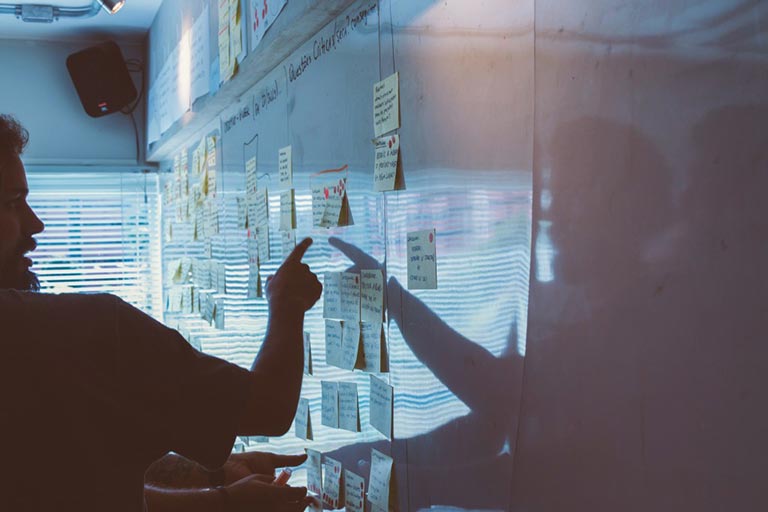
Having a clearly articulated alumni relations strategy is an absolutely essential factor for any institution. A strategy will provide a common purpose with shared and articulated goals. A plan of action will provide a university and its staff a clear path forward, allowing for the sensible allocation of resources within a manageable time frame.
From this, the path to success will be visible to all and an alumni relations department’s contributions to the institution as a whole will be more effectively articulated. Not just a path to success, but highlighting what not to do at the same time.
A solid blueprint will inform staff development, find strengths and gaps, identify partnerships and encourage an institution to keep pace with the changes happening.
Achieving success with a phased approach
Christine argued that there are five phases in the strategy development process:

Phase 1: Identify and clarify the challenges and tasks.
Environmental Scan
SWOT Analysis
Stakeholder Identification
Take a holistic look at the department and institution to get a better sense of a road map moving forward. Identify who might stand to benefit from the strategy as a resource. This can help to tell an effective story if the benefits are made clear from the start. For example, if part of the strategy is to encourage alumni to help identify new students to apply to the university, this will help the institution’s admissions department.

Phase 2: Gather and analyse data.
Personal Interviews
Focus Groups
Surveys
Peer and Market Analysis
Benchmarking
Phase two is the perfect opportunity to involve all stakeholders to raise their stakes in the game, so to speak. Focus groups are an incredibly valuable way to find out how audiences are feeling and what their perceptions of the institution might be.
Christine noted that it is important that institutions remain competitive by learning from other institutions but also argued against keeping peer analysis too predictable. For example, a large charity such as the Red Cross may have similar goals to an institution and would provide interesting insights.

Phase 3: Synthesis data, form vision and goals
Discern Mission, core purpose and shared values (What will we do?)
Vision (Where do we want to be in 3 to 5 years?)
Goals (What are our aspirations?)
Create a Strategy Statement
Be clear about embedding the institution’s mission into the strategy and constantly reinforce it, focussing on shared values. Christine argued that an institution’s goals should always be aspirational as it is ‘good for business’. The notion of completing a goal and thinking of ways it can be done better. Keeping goals at this aspirational level can keep an institution working harder and be more engaged in the outcomes.
Christine noted that having a clear strategy statement will crystalise those expectations.
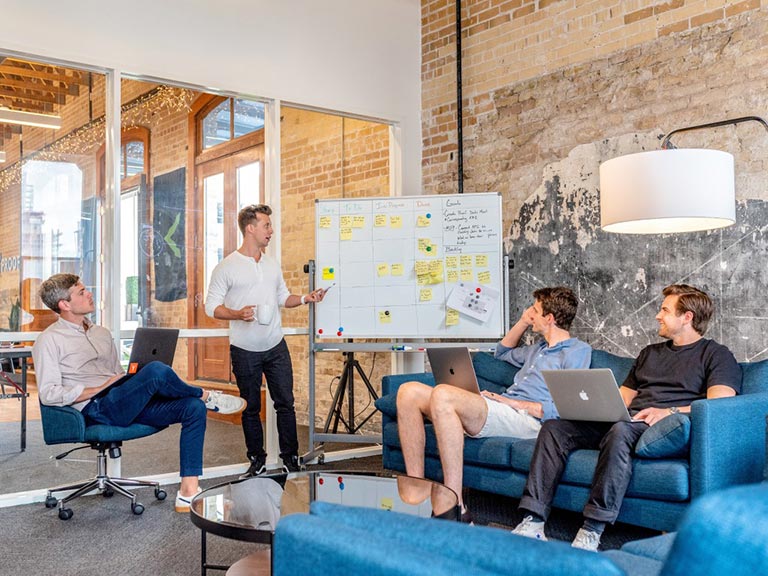
Phase 4: Develop measurable objectives.
Action Steps
Timeline
Accountability
Allocation of Resources
Christine noted that an institution must be clear about who it is relying on to ensure that the strategic plan is being delivered and that it is clear what the universities expectations are of them.

Phase 5: Plan, seek buy-in and approvals, implement, assess, report.
Socialise the plan with key stakeholders and influencers
Follow through on action steps
Evaluate and make adjustments needed
Report
“The most important thing to do is bring people along with you”, Christine remarked. “Bring people in from all across the university, from top to bottom, and include other stakeholders such as the alumni board”.
It is important to involve as many people as possible in this fifth phase. Show people throughout the process that goals are being achieved and show progress. The institution must constantly hold itself accountable for evaluation and make any necessary changes as the strategy moves forward.
Reporting gives stakeholders a chance to celebrate what has been achieved and is a great form of socialising the work that is being done.
Find out how Aluminate Community Builder can help supercharge your institution’s alumni relations strategy.
Subscribe to receive updates when we publish new and interesting content.
The post How to Create an Agile Alumni Relations Strategy appeared first on Aluminati Network Group.
]]>The post AI & AR – Alumni relations in the 21st Century: How to Train your Storytelling Algorithm appeared first on Aluminati Network Group.
]]>Get updates when we publish new and interesting content.
Professor Alex Connock, Fellow in Management Practice, Said Business School, University of Oxford, UK discussed how institutions should consider their communications strategy and offered some thoughts on storytelling and distribution in the 2020s. He argued that Alumni Relations is not just about getting money out of wealthy graduates but providing an environment where alumni can continue their education, long after they leave university.

AI for AR
“Predictive analytics is a broad term describing a variety of statistical and analytical techniques used to develop the models that predict future events or behaviours” – Predictive Analytics White Paper – Charles Nyce, PhD, CPCU, API 2007
Professor Connock argued that we are in a predictive algorithm economy. “Everyone’s Netflix profile is different…” he noted. No offering is the same for each account on the streaming service. If you watch romantic comedies, you will find that more often than not, that is what will be offered to you in the future. This was to such an extent that Alex has another entirely separate profile on Netflix, just so that he would be suggested different things to watch. The same can be said for the music streaming giant, Spotify and it is no accident that these two providers are the main players in their sectors. They are much better at utilising Artificial Intelligence than their competitors.
What is A.I?
As far back as 1950, Alan Turing’s paper, Computing Machinery and Intelligence considered the idea of machine learning and artificial intelligence, yet it is only now that A.I. is coming into its own, Professor Connock argued. Artificial intelligence can be found everywhere in modern-day storytelling and the stories being told are not for the masses anymore. Today’s stories are being told to the individual, on a granular level.
Marketing agencies around the world use a practice of Dynamic Creative Optimisation (DCO) which is A/B testing on a much grander scale. An A.I. algorithm will create thousands of different versions of an advertisement, testing them all simultaneously to find out which one works best for each person that sees it.
What this allows for is more creative storytelling which is especially important with alumni communications where institutions must maintain a distinctive message to remain engaging and stay relevant. Professor Connock argued that alumni are holding their universities more accountable with their data. The expectation is for them to use it more creatively, understanding the end-user better to deliver what is meaningful to them, and to avoid falling into storytelling clichés.
“Ever tried. Ever failed. No matter. Try again. Fail again. Fail better.” – Samuel Beckett
Professor Connock stressed the importance to institutions that when storytelling to never stop testing and never stop learning. Keep trying different content until it works. He argued that when benchmarking it was just as important for an institution to compare itself to others but also to other sectors entirely. For example, a large multinational charity might be striving for similar goals and it would be prudent to compare their methods to your own.
Professor Connock also argued that by all means, use the data that you have generated as an institution, but also, listen to the voices of your alumni.

Effective Storytelling
As time was limited, Professor Connock was only able to communicate the first four of his many rules for effective storytelling, but we hope to catch up with him again soon for the rest.
Be Authentic
Many organisations and institutions will use generic tropes and fall into the above-mentioned storytelling cliches. Alumni will not engage if an institution does not stand out.
Be consistent
It is important to have a ‘central brain’ to make sure an institution’s messaging is consistent across all channels but also to remain consistent within each channel. It is important to consider which messaging platforms require different tones for effective communications.
Bring passion to your communications
The more passionate an institution is with its communications, the more its alumni will engage. It is important to make sure that the messages are not purely functional. Passion is contagious and alumni naturally have a passion for their alma mater. Institutions must listen to what people are saying about them and put a persona behind their communications.
Learn the dark art of earned media
The more an institution can get other people to do the work for them, the better. Finding out what their alumni are achieving and what is worth talking about is critical to fostering success with your audiences and community.
Find out how Aluminate Community Builder can bring your Alumni community together.
The post AI & AR – Alumni relations in the 21st Century: How to Train your Storytelling Algorithm appeared first on Aluminati Network Group.
]]>The post Lessons from Establishing an Alumni Community at Coca-Cola appeared first on Aluminati Network Group.
]]>
Rebecca Cedrone, Vice President of Marketing & Enterprise Partnerships at Aluminati, spent 20-years of her career at Coca-Cola where she utilized her expertise in marketing to drive impact with brands, organizations and people. Four years ago she became their Director of Alumni & Community Marketing and was the keynote speaker at our recent Creating Connection webinar. Rebecca shared her experience in establishing the Coca-Cola alumni community from initial research through strategy development and launch.
Lifelong employment is no longer the norm. Building lifelong relationships should be.
Today, the large scale trends that are impacting the employer-employee relationship are:
- Increasing globalization
- War for talent
- Changing values and expectations of work
- Ubiquitous adoption of enabling technologies
Companies spend countless hours focusing on culture and this practice shouldn’t cease when an employee leaves the company. Many Fortune 500 companies have some form of alumni program. Some are alumni-led, some are corporate-led and nearly all are inclusive of former associates.
Why have an alumni program?
Organizations establish corporate alumni programs for many reasons and talent acquisition, brand advocacy and business development are at the top of the list. Many companies even place a monetary value on alumni that are rehired, which can lead to significant cost savings.
For Coca-Cola, corporate social responsibility also played a part, providing alumni with volunteer opportunities. Through those opportunities, they can target their CSR efforts and impact to the communities they serve. A factor that is held in high regard by the company.
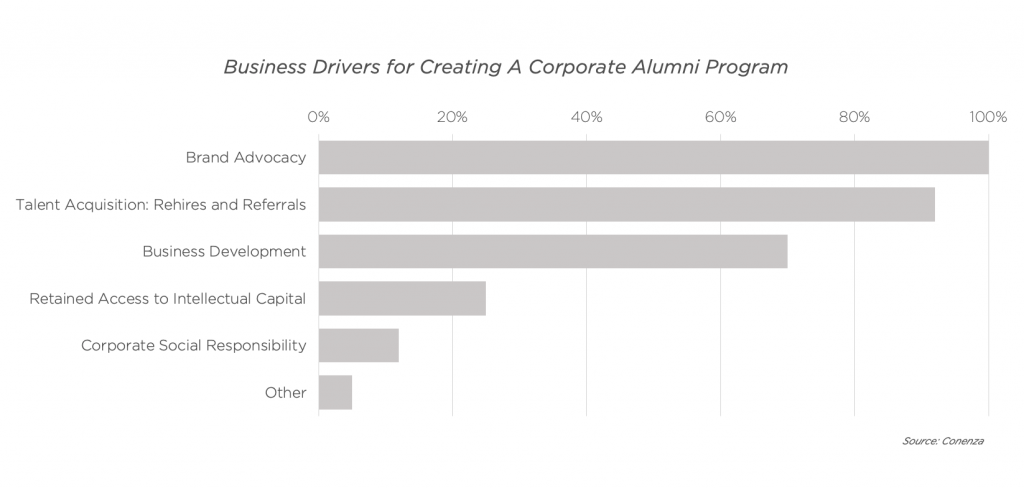
Whatever the reasons for developing an alumni program, organizations are reaping significant benefits.
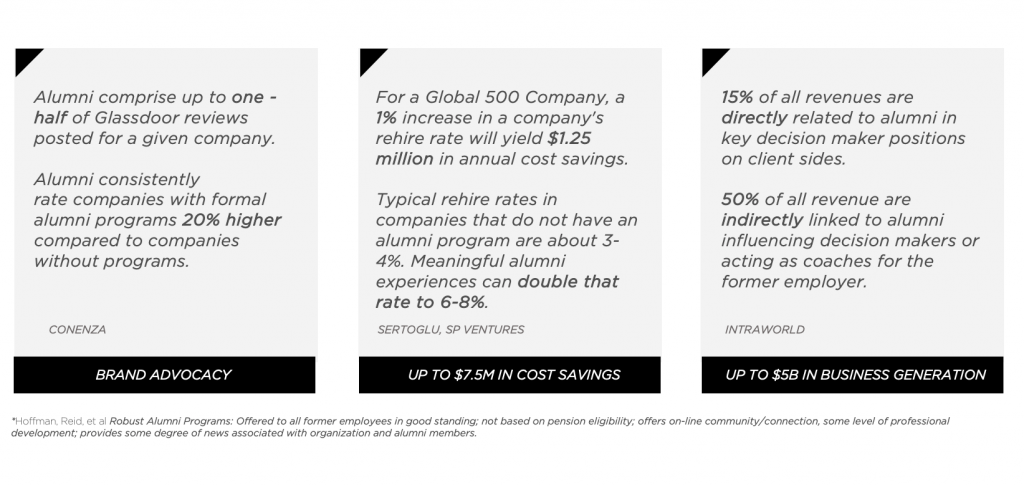
So how can an organization take these insights and embark upon developing their own alumni community? Rebecca argued that companies must utilize human-centred design to better understand their alumni. Developing a community that is centered on the needs of their alumni, will drive a sense of community, engagement and value.
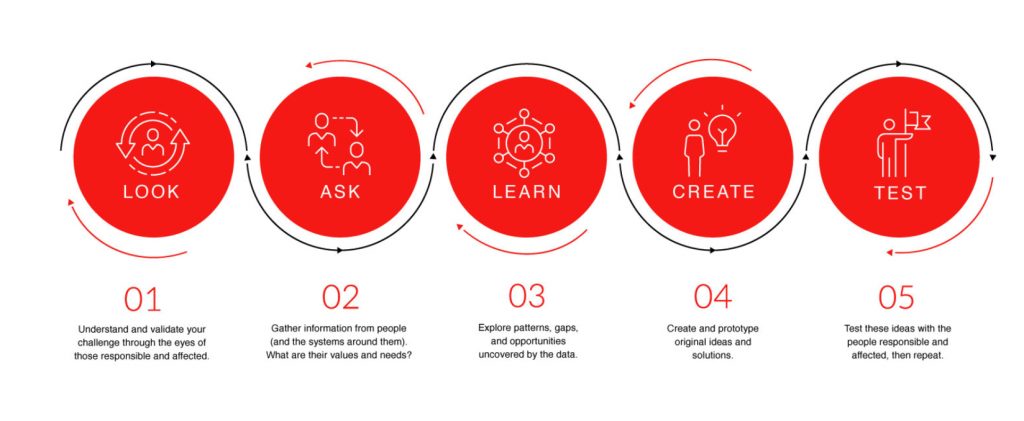
At the beginning of the development process, Rebecca and her team at Coca-Cola interviewed their alumni, retirees and current employees. From that, they identified three areas of opportunity.
- Expand the community
- Enhance the experience
- Evolve the offerings
They noticed that the company’s original definition of alumni could be expanded to include more associates, leading to increased engagement. Opportunities were discovered to enhance the user experience for their alumni by making improvements to the website and at the same time providing more opportunities for increased alumni engagement.
Rebecca also identified a diverse audience with varying needs. From this, she was able to develop six key alumni profiles to illustrate the range of perspectives and needs that a future alumni community would need to serve.
“The key is being able to engage with each profile appropriately and having a communications strategy that addresses their specific needs”. – Rebecca Cedrone
Vision & Value
Rebecca argued that companies need to define their own vision and value proposition. Looking to nurture lifelong relationships with members by embracing their individuality, cultivating their connection to each other and empowering them to influence the future of the business and the brand. Fostering intellectual curiosity through opportunities to both contribute to and learn from the communities collective knowledge and skills.
Members should be empowered to make a difference by honoring shared values and responsibilities. Rebecca noted that these values will allow an organization to constantly evaluate the development and success of the community.
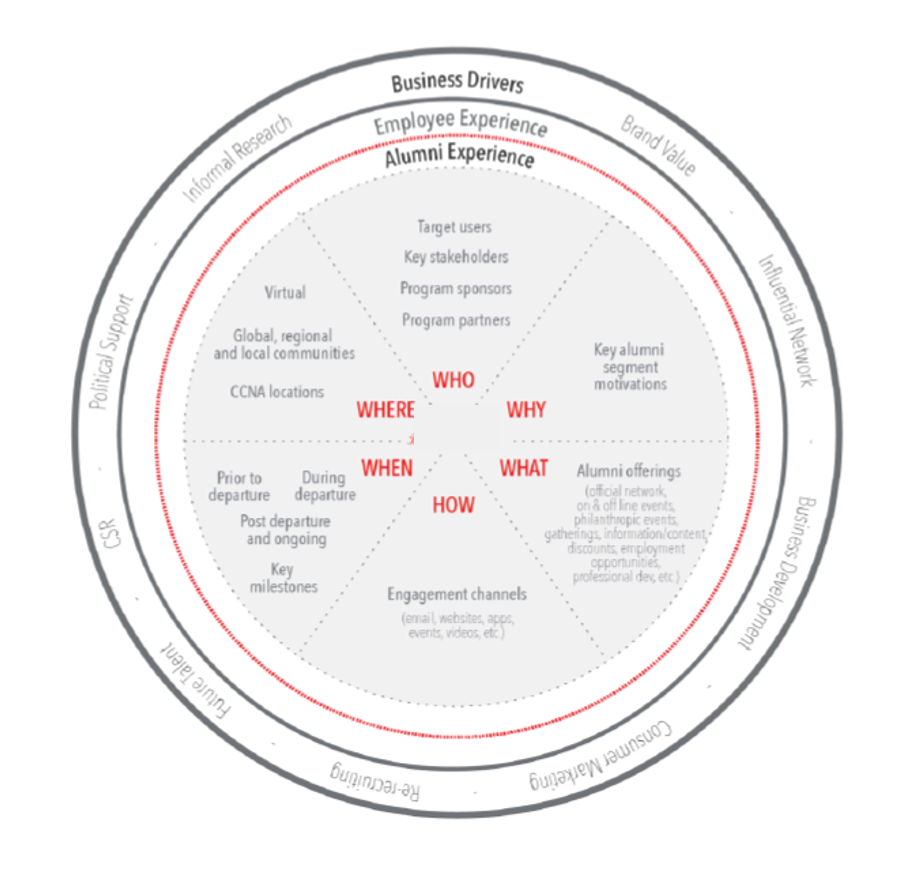
Designing an Alumni Community with a layered approach
Creating meaningful alumni offerings requires a holistic approach to truly identify human needs and desires and orchestrate moments that matter for all segments of the alumni community.
A layered approach allows a company to connect the business proposition with the needs of alumni to create an engaging experience, while also enhancing key business drivers.
Choosing the right platform
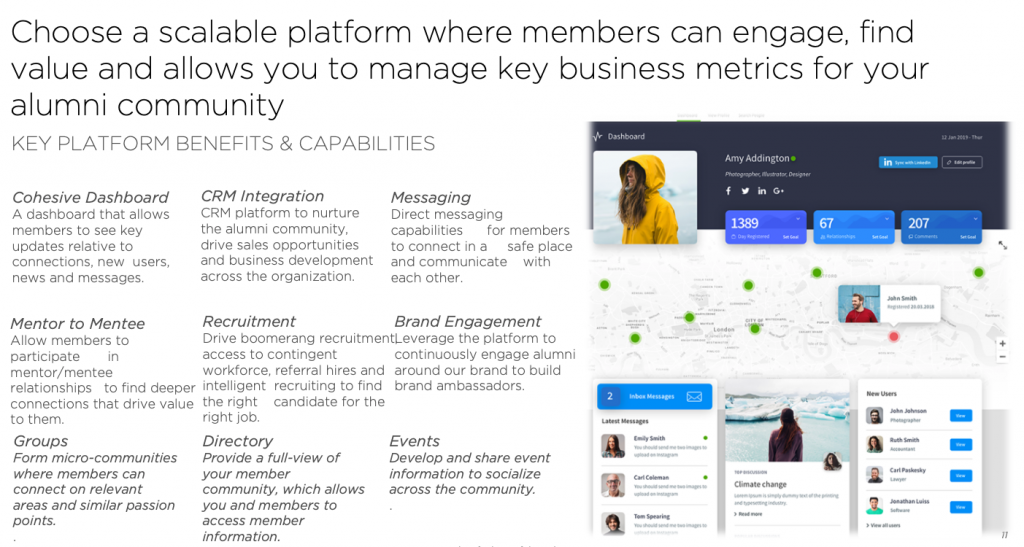
Rebecca noted that it is vital to choose a scalable platform where members can engage, find value and allows them to manage key business metrics. Collaboration and support from across the organization is critical to the success of the alumni community and implementation begins with senior leadership alignment, with a ‘top-down’ approach.
The Key Takeaways
In summary, for an organization to develop a truly effective alumni community, Rebecca noted four key points to consider.
- Identify the key benefits of developing an alumni community
- Understand the needs of your alumni
- Align the strategy and execution across your organization
- Identify a scalable platform with a provider who prioritizes your brand, your key business metrics and your alumni needs.
Find out how the Aluminate Community Builder can provide new opportunities for your organization and alumni community.
The post Lessons from Establishing an Alumni Community at Coca-Cola appeared first on Aluminati Network Group.
]]>The post CodeVA signs on with Aluminate Community Builder appeared first on Aluminati Network Group.
]]>CodeVA is a non-profit organisation, based in Richmond, Virginia, USA, that partners with schools, parents and communities to bring equitable access to computer science education to students across the state. It is founded on the principle that “anyone can code, and that every Virginia child has a fundamental right to computer science literacy”.
Why Aluminati?
CodeVA needed a more robust space for educators to collaborate and access materials during their annual training event. In addition, the company is currently working on a federally funded research project that consists of a cohort of rural school teachers from regions all across Virginia. CodeVA needed space for them all to collaborate and work together, receive training materials, and continue the discussion.
“We appreciated the Aluminate Community Builder’s ability to export data and content, its security with member logins and being COPPA Security Compliant (Children’s Online Privacy Protection Act 1998), the ability to support multiple user types, the ability to allow for multiple types of engagement (forums, discussions, events), and the ability to host multimedia extensions and learning modules”. – Betsy Seymour – Project Lead, CodeVA.
Room for Growth
CodeVA is starting the platform with a small number of users, with plans to grow from there. They are also building the internal support required to nurture a robust and engaging community, hiring a web developer and training content coordinators etc. Betsy said, “We hope to slowly phase out some platforms such as our current online platform and CRM once we get a feel for everything that the Aluminate Community Builder can do”.
Having compared other platform providers, the Aluminate Community Builder was the only one that met all their requirements, price point and build time-line. “We appreciated that the platform has a dedicated development team for the project, full GDPR security policies in place and learning modules baked in”, said Betsy.
Betsy said that teachers who participate in training with CodeVA have requested more opportunities for engagement, collaboration and communication, as well as more access to resources. The vision for their platform is to extend training to all of their cohorts to allow for more authentic and consistent online engagement.
We will be checking back in with CodeVA once their platform is launched.
Find out how Aluminate Community Builder can supercharge your community growth.
The post CodeVA signs on with Aluminate Community Builder appeared first on Aluminati Network Group.
]]>The post ACS International Schools partner with Aluminati to power their online community appeared first on Aluminati Network Group.
]]>ACS International Schools has partnered with Aluminati to build their online student alumni community.
Read the full case study here.
The post ACS International Schools partner with Aluminati to power their online community appeared first on Aluminati Network Group.
]]>The post 3 Top Tips To Quantify Tangible Impact Of Your Online Platform appeared first on Aluminati Network Group.
]]>Whilst this feels intuitively true, it can be tricky to quantifiably prove the value of these platforms, as changes of human relationships, emotions and interactions are hard to measure. Alongside the long-term benefits of creating meaningful lifelong relationships there are more immediate positive impacts that can be measured.
We offer three ways to directly tie your platform to more common KPIs that development and alumni relationship offices are often measured against:
1. IMPACT on Quality of Data:
The existence of an interactive online platform gives users a reason to update their details with the university. Participating in a social space comes with the expectation of presenting yourself accurately and this motivates the entry of data that may otherwise be a challenge to acquire, such as business details and location. This is further facilitated when there exists easy syncing capabilities with other networks, such as LinkedIn, pulling data locked in hard-to-reach sources into a platform you control.
Data is not only key for alumni engagement, but hugely valuable for other areas as well such as international initiatives, prospect research for fundraising, admissions for graduate programmes, student success tracking for national surveys, and many more.
ACTIONS to prove impact: Establish a process to identify what data originated from your platform so you can prove its impact on data quality. We recommend three really important ones: new employment details obtained; new email addresses secured; lost alumni found.
2. IMPACT on Fundraising:
Fundraising is easily quantifiable with clear targets and numbers around campaigns and regular giving. But how can we tie in the effects of your platform? In fact, platforms are closely interlinked in supporting your fundraising efforts, a fact that is often overlooked by engagement teams.
A platform attracts a new crowd of alumni back to the institution by engaging them with volunteering; a gift of time that often precedes a financial gift. Platforms allow the identification of new alumni who have a provable inclination to give that would not have been flagged by traditional research methods on other databases. An online community also allows current donors and prospects to engage with current students, an incredibly important tool to accelerate the fundraising cultivation stage. When they help a fellow alumnus or a student, it highlights the needs of the university in a very personal and human way.
ACTIONS to prove impact: Task your prospect research team to analyse participation data from your platform to identify alumni who are giving time and record the number of newly identified prospects. Also track the participation of current donors and incorporate their experience in your fundraising stewardship conversations. Measure the giving rates and open rates of platform participants vs non-participants.
3. Quantify the IMPACT of Mentoring:
Mentoring is a bit of an abstract concept, regarded as difficult to track and measure. How useful is an interaction within a mentoring relationship? How often do interactions happen? What happens when mentor and mentee go offline?
These are all complex questions, but for students and alumni, having access to a diverse network of “experts” for advice is a powerful benefit.
Some institutions attach a monetary value: an hour of interaction is considered to have the value of one hour of consultancy. You can estimate that rate between £30 to £50 an hour. You might also estimate that each mentoring relationship will share a minimum of 4-6 hours of contact throughout the duration of the relationship.
ACTIONS to prove impact: Take measure of how many active mentoring relationships you have, multiplied by the average number of hours observed in relationships and then multiplied by the hourly value figure you’ve chosen (eg £45/hour). This gives you a “financial-equivalent” estimate on the value mentoring is giving to the university. Of course this calculation can be performed on your various other volunteering activities too!
Proving the IMPACT of Alumni Relations
As ROI and measurability start to become an acknowledged and powerful part of the job, the value and power of alumni relations is set to increase. With metrics comes measurability, KPIs and the opportunity to set SMART alumni marketing goals which in turn attributes value to a previously important but unmeasurable and consequently sometimes overlooked role. Being able to directly relate growth to alumni relations highlights the pivotal role this department plays in the life cycle of the university and the value of relationship platforms.
Want an online platform that makes an IMPACT?
Get in touch to learn how Aluminati can help.

Aluminati Strategic Consultant, Maria Gutierrez, has worked in higher education since 2009 with roles at Boston University, Harvard and King’s College London.
Maria is a Behavioural Coach (certified by the British Psychological Society & the International Society for Coaching Psychology), a Trainer for Mentoring Trainers, Mentors and Mentees and a Core Values interviewer.
The post 3 Top Tips To Quantify Tangible Impact Of Your Online Platform appeared first on Aluminati Network Group.
]]>