The post How to Support Your Alumni Journey appeared first on Aluminati Network Group.
]]>
The second conference in the series discussed the journey that alumni take and how institutions might best support them and their students, highlighting the value of alumni relations programmes in the education sector.
Christine Fairchild, Director of Alumni Relations at the University of Oxford, UK suggested that the transition from student to alumni really marked the beginning of the alumni relationship. However, she also noted that students can also begin receiving advice, mentoring and support before they even become students at the university. She described it as “a lovely slow build to this relationship journey”.
Students are more aware now that they are joining a whole community. A community that will be with them for life.
Erica Arroyo, Associate Vice President of Engagement at the University of Miami, USA initially had only one member of staff at the university who was tasked with administrating the student to alumni transition period. Now she has a Family Relations Team as well as an Annual Giving Team to assist with this transition. These teams also have a great relationship with the university’s careers department as well as Student Affairs. This means that Erica and her teams can maintain alignment across campus and attend to the needs of their alumni more effectively.
Erica noted that a lot of the university’s students also had very strong social media circles. This means that they had the potential to be great ambassadors for the university and its Alumni relations programmes. The transition teams identify these students early on in their journey.
Other strategies deployed by the University of Miami were creating alumni ‘personas’ and creating events and engaging content to suit them. One such strategy was that of targeting ‘legacy alumni’. Legacy alumni are the children and grandchildren of current university alumni. This has proved to be a great way of strengthening the relationship between alumni families and the university. Getting children interested in the institution with various touchpoints such as guided tours and events showed that an affinity with the institution was built from a young age. However, focussing on alumni ‘personas’ was not the only solution.
It was noted that companies like Amazon were using data to generate a highly personalised approach to their customers and this is a model that, if applied to an institutional framework, would prove to be a much more effective relationship-building strategy. Whilst these strategies work well in the United States, the United Kingdom tends to approach alumni relations differently.
UK universities, more often than not, will try to attract people from more disadvantaged backgrounds and therefore group alumni associations around that particular demographic.
Miami University’s alumni transition teams are currently engaging with students over the entire course of their university life and Erica noted that the students almost become “Alumni in training”. They have introduced various different programmes throughout their university life to ensure rounded engagement. Unfortunately, the COVID-19 pandemic has forced the university to rewrite their approach to building these relationships, but whilst the strategies have changed, the goal has always been to ensure that students are encouraged to be part of a community.
During the course of the conference, it was noted that the GDPR laws throughout the UK and Europe make it harder for institutions to maintain contact with their Alumni.
Because of this, a common goal for universities is to increase the percentage of contactable alumni. This is an area where our Aluminate Community Builder platform can really help institutions maintain and dramatically increase engagement with their students and alumni.
Another common discussion topic was the current economic climate brought on by the COVID-19 pandemic. With students graduating into a ‘high alert economy’ and employment rates falling, alumni relations and mentoring programmes are more important than ever.
This is evidenced in our white paper The Effects of Mentoring on Employability.
A study from the Centre for the Study of Higher Education presented by Sarah Banks, Head of Alumni Relations at the University of Melbourne, Australia showed that 95% of participants in its study would be happy to return to the university as a mentor. Sarah also noted that nothing builds loyalty in an institution more than students and alumni knowing that they are supported and in turn, are more willing to support others.
It is clear that the alumni journey begins, or at least can begin from a very young age. Relationships nurtured over long periods of time can lead to much stronger and longer-lasting relationships. Universities must be a key partner to students on their journey to becoming alumni, adding value to their university experience, day by day.
Aluminati was proud to sponsor the Introduction to Advancement Leadership conference, hosted by CASE, which kicked off at the beginning of November with talks covering various topics with panels of industry leaders and experts leading the conversations. Be sure to check out our first article in this series World Class Alumni Relations.
Find out how Aluminati can help supercharge your institution’s alumni relations programmes.
The post How to Support Your Alumni Journey appeared first on Aluminati Network Group.
]]>The post 12 Tips For Finding Volunteers To Support Your Cause appeared first on Aluminati Network Group.
]]>Volunteering has tangible benefits both to organisers and volunteers. Here are 12 tips to help get more volunteers to engage with your opportunities.
- Find out the things that motivate your volunteers. A good way to discover this is to ask existing volunteers to describe why they volunteer in 10 words or less.
- Recognise and utilise your volunteers’ unique skills. People wish to feel valued, so taking the time to understand their skills and find appropriate opportunities will get the best out of people.
- When choosing a project that you require volunteers to support, choose one that that you feel passionate about. Your enthusiasm will be infectious!

- Volunteering in a professional capacity will allow candidates to gain vital experience and insights, and help inform their career choices going forward.
- Consider what the candidates get out of the experience: what is the value to them? Whilst some may volunteer simply to do good, most will at least want some recognition of their work, for example, to enhance their CVs or meet new connections.
- Choose causes or issues that are important to you and align to your strategic goals and priorities. People increasingly want to know what the institutions and businesses they deal with stand for and contribute to society. Supporting a good cause is a great way of showing your commitment.
- Consider working in partnership. There will be organisations and individuals that already have experience and recognition in their field. Working in collaboration will make organising and promoting events easier.
- Word of mouth is still the best way of promoting your cause. According to Nielsen, 92% of consumers believe recommendations from friends and family over all forms of advertising.
- Be clear and specific when it comes to what skills you are looking for when advertising volunteering opportunities. People want to know that they can make a meaningful impact and feel their efforts make a difference. A clear idea of the role will allow them to make a fast decision.
- Get back to volunteer enquiries in a timely manner. Nothing puts potential volunteers off quite as much as a delayed response, especially in a digital world. Imagine offering your time for free and having to chase. How would it make you feel?
- Bear in mind that there is a different relationship between paid staff and volunteers. This is why supporting their efforts, rather than managing volunteers is a better approach, sharing your experience with them to help achieve a collective goal.
- Recognise volunteer contributions and efforts in a timely and personalised manner where possible. Manchester University found that sending out handwritten thank you cards resulted in a massive increase in volunteer satisfaction than sending out lavish gifts or generic communications.
I hope that you have found this post useful. Find out how our engagement platform, Aluminate Community Builder makes building and promoting your volunteering easy.
You may also be interested in our 10 takeaways from the CASE Working With Volunteers conference that features practical ideas on how to further increase your volunteer engagement.
About The Author

Andrej Dethlefsen
Marketing & Communications Officer at Aluminati
He is passionate about education, communications and community.
The post 12 Tips For Finding Volunteers To Support Your Cause appeared first on Aluminati Network Group.
]]>The post 10 Takeaways from CASE Working With Volunteers 2020 appeared first on Aluminati Network Group.
]]>As the UK leave the EU, this year’s CASE Working With Volunteers event took an intentional focus on institutions harnessing the global power of our alumni volunteers to create a worldwide impact.
Here are some takeaways from the impressive lineup of passionate professionals from our industry.
- Enthusiasm, communication, and adaptability are essential when trying to strike a balance between a professional, well-managed event with the integrity of a grassroots, volunteer-led, passion project.
- Co-creating alumni engagement activities with volunteers is worth the effort! Collaboration brings value far beyond what could be achieved ourselves with current resources.
- Encourage authentic stories from your global community of alumni volunteers to celebrate success, share ideas and model good practice. Genuine and personal stories have the emotional hooks that will encourage more to get involved in volunteering activities and initiatives.
- Our alumni are global citizens. We want our students (both local and international students) to become these global citizens too. Our global alumni volunteering programmes are ideally placed to build the global competencies for our alumni volunteers and for our students.
- We should align strategic institutional goals with volunteering. Our alumni reflect the ambitions of our institutions. These are the values our institutions stand for as highlighted in our plans. We should leverage, promote, and strategically remind the key decision-makers in our institutions that our global alumni volunteers are the embodiment of our institution around the world.
- As we work in institutions that value solid research, our research to show the impact of our global volunteering needs to be solid, empirically sound and evidence-based in order to get buy-in from above. This will enable our alumni volunteering programmes to thrive and grow.
- How do we measure the success of our mentoring programmes? One of the measures that Dublin City University (DCU) use is the number of mentees who go on to be mentors, which is currently 15%.
- Universities face many challenges with fierce global competition for the best talent, branding and strengthening their reputation abroad. An engaged, vocal, and increasingly global alumni body is the best way to future-proof your institution.
- In Alumni Relations, we are quite good at measuring things like the number of contactable Alumni, events and attendees. But there is a difference in counting what we are doing, and the value of our efforts to us and our alumni. Try doing an exercise where people think of one word associated with their volunteering experience. This is great to establish the motivations for volunteers.
- Manchester University discovered that volunteers don’t want lavish gifts, rather a personal touch. In their presentation, they talked about how creating 150 handmade thank you cards with personalised, messages resulted in extremely high levels of volunteer satisfaction. The impact was amplified by sharing a short video on social media showing the effort that went into their creation.
These are just a few of the things that I learned at this year’s Working With Volunteers conference. This was my first time at this event, however, I have attended a number of CASE conferences in my 10 months in the role and was once again struck by the warmth of the people people who work in our industry. Hearing their incredible ideas, feeling their empathy, and seeing the positive impact they make every day to people’s lives is truly rewarding.
I look forward to catching up with you all again and hope to get to know more of you as I grow in my role.
About The Author
Andrej Dethlefsen
Marketing & Communications Officer at Aluminati
He is passionate about education, communications and community.
The post 10 Takeaways from CASE Working With Volunteers 2020 appeared first on Aluminati Network Group.
]]>The post Why Do We Need Global Alumni Volunteers More Than Ever? appeared first on Aluminati Network Group.
]]>Article first published: March 2020
Dr Maria Gallo, Founder and Chief Alumni Strategist of KITE: Keep in Touch Education
I had the pleasure earlier this week to address a sell-out crowd at the Council for the Advancement and Support of Education (CASE) Working With Volunteers Conference in Manchester, supported by Aluminati. Delegates came from nine countries from across Europe and beyond, and it was a high energy crowd. This is no surprise as alumni relations professionals are relationship-building specialists. Working with alumni volunteers is the ultimate in forging strategic relationships with graduates to offer a mutually beneficial value proposition.
Our educational institutions are becoming more globally-facing, attracting international students, collaborative research projects, exchange programmes, and global internships to name a few.
Engaging our global alumni is more crucial now more than ever. Apart from internal pressures facing higher education related to finance and global competition for students and reputation, our institutions have a unique role to play to challenge the anti-internationalisation discourse. Our institutions, along with global alumni networks, can educate and foster alumni as global citizens while contributing to finding solutions to global challenges.
At the keynote session that started the conference, I presented three key reasons why we need to engage our global alumni now more than ever:
 Encourage Storytelling
We need to encourage authentic storytelling from our global alumni. Every one of our international students-turned-alumni and every one of our alumni who move abroad after graduation has a story to tell. These stories can be insightful and of interest to our wider institution’s community.
Prospective students, current students, academic and administrative staff can learn from these experiences and these global alumni need a platform to tell their story.
Meaningful global alumni volunteering roles are the ideal, formal way to encourage this story.
To do this, alumni relations professionals need to become global alumni volunteering facilitators of all the volunteering that is happening across the institution. It is tempting to be the “doers” of all global alumni engagement. Instead of coordinating all the work happening across the institution, alumni relations professionals should be the strategic supporters of this work, making sure it aligns with good volunteering practice, stewardship of these volunteers, and, most crucially, identifying and encouraging global alumni to become volunteers across the institution. This will allow for the authentic stories of global alumni to shine.
Why do we need to engage global alumni now more than ever?
To tell the story of their prior journey during and after graduation in order to inspire others across our institutional community.
Embracing global citizenship
 We want our students, both local and international, to become responsible, active global citizens. The global alumni volunteering programmes across our institutions are ideally placed to build the global competence of our alumni volunteers and students. What better place is there to explore intercultural issues, interact with people from different cultures and take appropriate action for our world?
These are desirable skills for the labour market that has changed dramatically over the past two generations. Additionally, it tackles the greatest challenges facing our planet with 17 Global Sustainable Development Goals agreed by the United Nations.
Go to class and get involved.
This is how I understood the advice I was given as a new undergraduate student over 25 years ago. It reminded me that subject-specific material was important, but some of the real learning was outside the lecture halls, labs and classrooms.
Fast forward to today and we find our campuses are brimming with diversity and global opportunities. Our institutions are reinforcing a global mindset for students through their teaching and learning, research, and community engagement activity.
Therefore, global alumni networks, such as the Holland Alumni Network or the Chevening Alumni should not be feared by our institutions but encouraged as part of this global citizenship agenda. These omni-alumni networks offer our alumni abroad a gateway to participation, and, as research suggests, connection with alumni activity and volunteering.
This may be their point of identity – they identify, for example, as an alum from Ireland, Belgium or the UK, and later through fostering their alumni involvement and identity at their institution of study. The research on alumni identity shows that alumni need to identify as alumni first then they can begin their journey as an active alumni citizen and potentially as a global alumni volunteer.
Why do we need to engage global alumni now more than ever? To foster and contribute to embedding global citizenship in our institutions, encouraging collaborations to tackle some of the most challenging problems facing humanity together.
Reflecting Our Ambitions
Finally, our global alumni reflect the ambitions of our institutions. These are the values our institutions highlight in strategic plans and have emblazoned across their promotional materials. We should leverage, promote and strategically remind the key decision-makers in our institutions that our global alumni volunteers are the embodiment of our institution around the world. We need rigorous stewardship plans to ensure our global alumni are involved in volunteering that is meaningful and aligns with the values of the institution and their own ambitions.
Since we work in institutions that value research, data to show the impact of our global volunteering needs to be empirically sound and evidence-based. A sound research base – both quantitative and qualitative – is a crucial investment if are to get senior management (many of whom are academic researchers themselves) buy-in. Case studies, surveys or impact metrics should be rigorous, reflective and ambitious.
There is a drive to think global and act local in our institutions. Our global alumni reflect our institutional values. By showing the global alumni engagement value through sound research, we can watch our global alumni volunteering programmes thrive and grow, and, with its success, the impact for our institutions and the wider world.
 About the author
Dr Maria Gallo is a Visiting Research Fellow at Trinity Business School at Trinity College Dublin and a Research Fellow with the Community Knowledge Initiative at the National University of Ireland, Galway. She is the founder of the social enterprise KITE – Keep in Touch Education, that focuses on research and initiatives that build alumni connections from life for life.
Maria is also a self-confessed serial global alumni volunteer at all five of her alma maters in Ireland, the UK and Canada. To connect with Maria on LinkedIn or visit her web site www.keepintoucheducation.com to sign up to her newsletter for alumni insights and research.
The post Why Do We Need Global Alumni Volunteers More Than Ever? appeared first on Aluminati Network Group.
]]>The post Introduction to Fundraising and Alumni Relations 2020 appeared first on Aluminati Network Group.
]]>We were proud to be primary sponsors of this year’s CASE ‘Introduction to Fundraising and Alumni Relations 2020’ conference, the annual introductory course designed specifically for those new to fundraising, alumni relations and development services. The event took place in the centre of Manchester and featured two days of inspiring sessions, interactive workshops, and networking where sector experts shared a range of strategies and best practices.
Here are a few takeaways from the event:
Alumni Engagement
- Use Social Media – many advancement offices have a social media manager responsible for developing social media communications and content strategy. Messages can be highly targeted, for example at different generations such as Millennials and Baby Boomers.
- Content such as video and printed publications can be repurposed to social media content and direct communications to encourage two-way communications with your alums.
- Bespoke alumni websites and platforms can provide a trusted, branded safe space for your students and alumni to engage with you and each other.
- Measure the effectiveness of your alumni relations using analytics. Data-driven, measurable outcomes should track impact and inform the best use of future resources.
- Data helps you to segment and target your stakeholders, allowing you to build relationships that provide value to both alumni and the institution.
Fundraising
- Those that are already donating are most likely to give again, but this requires careful stewardship. In fundraising, the thank you is the first step towards getting someone to give again.
- You should embed fundraising into your university. You are not a fundraiser or fundraising department. You are a fundraising university where everyone helps with the mission.
- Traditional revenue streams are being squeezed. Philanthropy will only continue to grow, so investing in a fundraising strategy is key to future-proofing.
- Legacy fundraising is the largest and most personally significant gift an individual will ever give to your institution or cause.
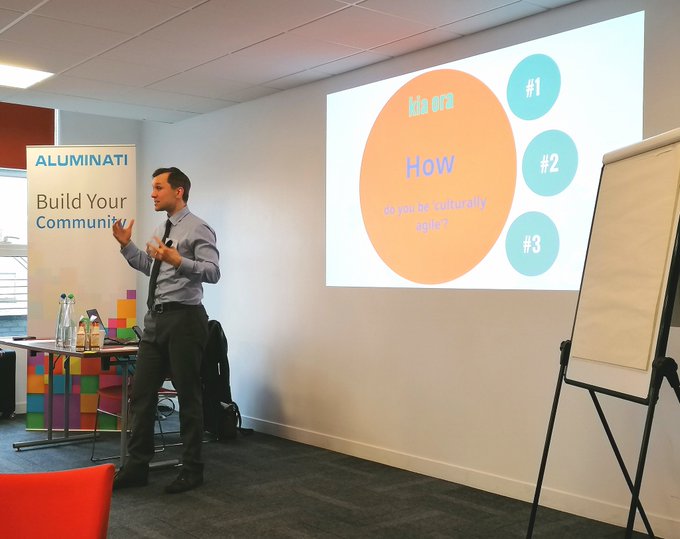
Markus Karlsson-Jones, Global Volunteers and Networks Officer, explained the challenges, considerations and rewards of working with international alumni.
Communicating with International Alumni
- Email is relied on for 95% of alumni communications. However, in certain countries and cultures, it is less effective than others. In China, the University of Manchester found WeChat and Weibo more effective communication channels.
- When sending out international communications be aware of the different time zones.
- Language barriers can be a problem, especially for those alumni who have not had to speak or read English for a long time.
- Local organisers make it easier to ensure events go smoothly.
Conclusion
CASE’s Introduction to Fundraising and Alumni Relations conference is designed specifically for those new to fundraising, alumni relations and development services, but it is so much more than that. It is an opportunity to network, share knowledge, and become more effective in our professional roles.
This is why we have formed a partnership with CASE to support their work and provide the platform for their e-mentoring service.
About The Author
Andrej Dethlefsen
Marketing & Communications Officer at Aluminati
He is passionate about education, communications and community.
The post Introduction to Fundraising and Alumni Relations 2020 appeared first on Aluminati Network Group.
]]>The post Why Online Community Platforms MUST Change (And a Big Reveal!) appeared first on Aluminati Network Group.
]]>Over the last few weeks, I have written a series of blogs, starting with ‘Should you call your Alumni the “C-word”?’, which tracked the evolving relationship between students and their institutions, considering whether we should also be treating alumni as customers.
In ‘Death by Disruption’, I looked at how fast-moving innovative companies like Netflix and Amazon have fundamentally changed our service expectations and perceptions of value, and what we must learn from this in order not to go the way of BlockBuster.
In ‘Building capacity for 2020 and Beyond’, I looked at how we can futureproof our large scale engagement programmes by leveraging technology, and recently, I presented UWE Bristol’s Success Story where they used a community platform to dramatically increase alumni engagement and propensity to give.
 An evolving vision
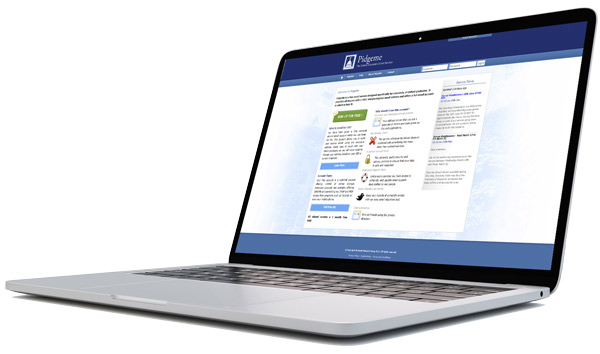
In the early 2000s, as a graduate from Oxford, I created PidgeMe.com, an independent ‘Oxford Graduates Email Service’. Myself and other graduates, having for several years coordinated our lives using our university email accounts, were unhappy about losing this critical communications platform exactly at the time we needed it most: to keep in touch after leaving the university.
PidgeMe proved extremely popular and the model was soon replicated at other universities such as UCL and Cambridge.
As an alumnus, I observed not just the strong desire for peers to keep in touch with each other, but how open they were to other alumni that they did not already know.
This effect, I discovered, had already been formally researched by Mark S. Granovetter of Johns Hopkins University back in 1973. His paper ‘The Strength of Weak Ties’ highlighted how crucial it was, both to the individual and to the community, to maintain relationships with people outside your tight inner circles of friends, family, workmates etc.
A desire to facilitate this giant ‘network of weak ties’ became Aluminati’s mission and led to the birth of Aluminate. Initially, an alumni-only online directory that made it easy for graduates to keep in touch, it soon became much more. With a growing team of talented developers and continuous input from partners and clients, the platform soon became a powerful expanding community that included other classes of members – students, then staff, then external partners, prospective students, placement offer holders, parents, employers. A university community includes a lot of people!
 Innovation and development
As pioneers in the industry, we were innovating and reshaping engagement in every iteration of Aluminate, creating many sector firsts: the first truly peer to peer online mentoring network, the first digital recruitment ambassador programme, the first volunteer-led chapter management facility. The drive to meet the needs of institutions and empower our users led to ever newer versions introducing exciting new modules and integrations, including digital libraries, events, job boards, single sign-on (SSO). With each version of the platform becoming more powerful, despite new competition emerging, Aluminate continued to be regarded as the industry leader – the most flexible and deeply implemented option on the market.
And then the lights went out. It has been almost 5 years since the release of Aluminate 6.
But innovation had not stopped. Quietly, in the dim glow of dozens of monitors, we were working on something bigger, something that once again would revolutionise our industry and change the face of community platforms as we know them.
The paradigm shift
When we started thinking about Version 7, we acknowledged we could keep building modules and adding ever more sophisticated ways to allow clients to take control over their varying, hyper-targeted, multi-constituency memberships with their own specific and tailored requirements.
What we knew from experience, is that every client is different, and using the same approach as before would mean we would continue to have to build configuration options for each one – meaning a long project, consultation, launch, and then trying to fit that solution to everyone’s slightly different needs with painful and expensive customisations, modifications and extensions.
So we didn’t do that.
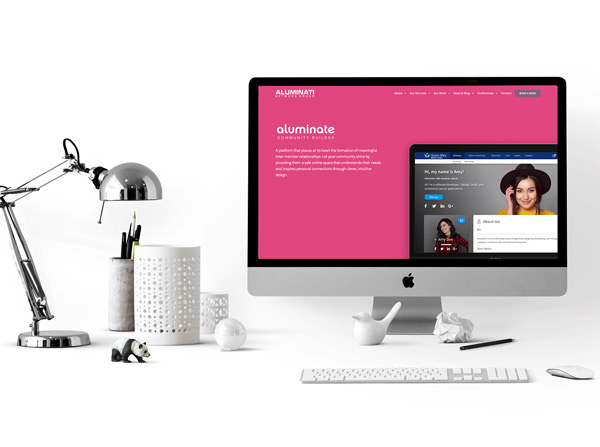 We went back to the drawing board and redesigned Aluminate from the ground up. We decided that the new version needed to break this cycle and take Aluminati out of the ‘engagement innovation cycle’. We provide the technology, but you, our professional engagement partners, provide the genius and inspiration on what is needed, what is being demanded, on the ground.
Aluminate needed to empower you to take your ideas from conception to launch without waiting a year for your provider to come up with a solution that may or may not be right for you. We knew we needed to retain our most popular features and modules, but those would just be where the magic started.
Aluminate Community Builder was born. With the introduction of the concept of continuously being able to build, extend and develop the platform, we realised that it was time to drop the version numbers.
This Aluminate would be the last platform our customers would ever need.
Our dream is that Aluminate Community Builder will do for community platforms what WordPress did for the web.
Watch the launch webinar
Over 100 Alumni Relations, Fundraising and Careers professionals attended the highly anticipated launch of our new community platform.
A replay of the presentation is now available.
The post Why Online Community Platforms MUST Change (And a Big Reveal!) appeared first on Aluminati Network Group.
]]>The post Building capacity and leveraging tech to prepare your AR programme for 2020 and beyond appeared first on Aluminati Network Group.
]]>In my previous post, dramatically entitled Death by Disruption and Alumni Relations’ Secret Weapon, I looked at how a focus on the customer experience is disrupting the commercial world and what we can learn from it as alumni relations and advancement professionals.
With alumni populations rapidly growing, there is an increased recognition that a robust programme to develop sustainable communities is essential to the future success of institutions.
There are very clear reasons for this, one major factor being fundraising. Annual donations to UK universities passed the £1 billion mark for the first time in 2017 and continue to rise. This number is dwarfed by our counterparts across the pond where giving in 2018 increased by 7.2% to 40.3 billion dollars.
Peter Lock, Alumni Relations Officer at Bournemouth University, told Red Brick research: “Creating an engaged alumni network is beneficial for us because engaged graduates are much more likely to want to “give back” to the University; that could be, for example, by coming back and sharing their experiences with prospective and current students – there are no better ambassadors for your university than your alumni!”
So, how do we maintain close relationships with our growing alumni community and extract value for all stakeholders?
Keeping it personal
As I mentioned in my previous article, institutions hold a special place in the hearts of Alumni, and you have the distinct advantage of having trust on your side when asking for attention. The time spent in education is something that we remember for life, and the vast majority of alumni welcome communications from their alma mater. Decades after leaving, I still welcome the newsletter with updates and enjoy reading about what my former classmates are up to. I also review upcoming events I might wish to attend as real-life person-to-person interaction is what I value most.
For institutions, keeping contact information updated is clearly one key aspect of staying in touch.
Another more complex challenge is to ensure communications are personalised and relevant by having an understanding of the current professional and personal interests of alumni. Alumni means, interests and judgment about the relevance of their alma mater is constantly changing. As a consequence, institutions are having to think ever more strategically to extract the benefits and opportunities that will engage their largest and most enduring constituency.
 The value of a network
For alumni, a high-performing connections programme provides key business contacts and opportunities for career progression through a network of inspirational alumni successes, many of whom will volunteer as mentors.
For students, this connection network can lead to work experience, professional networking, and mentoring opportunities that will help them get started with their careers. Engaged alumni also play a key role as ambassadors for an institution, helping students make an informed choice when it comes to selecting their university and specialism.
For institutions, these relationships are vital to future success in terms of fundraising, legacy, and carrying forward their social mission.
So, it is clear that both on a personal and professional level, alumni networks remain extremely valuable to all stakeholders. The challenge is how to ensure that we communicate meaningfully at scale in order to extract value from our networks.
Facilitating meaningful connections
An important aspect of any well-run alumni association is the evolution from simply a ‘provider of information’ to one which forms a genuine relationship that stays with each alumnus for life.
With tens or even hundreds of thousands of alumni on the books, and the number growing year-on-year, it is a tall order for even the best-staffed alumni relations office to personally relate to the majority of their membership.
There are now ways to achieve this using modern technologies and solutions to become a Facilitator of Connection, allowing your community to engage with one another through a peer-to-peer network. This allows students and alumni to appreciate the continued value of their shared educational experience and thus keeps the relationship with their alma mater warm.
This is the concept of disintermediation; taking us away from traditional, institution-centric networking toward decentralized communication. This concept has already changed the way schools, colleges and universities are engaging with their alumni, and it continues to shape that relationship as institutions adjust.
Technology has a big role to play in this change and presents cost-effective opportunities to scale these relationships using communication channels and platforms.
 Technology to build connections at scale
With limited resources and a growing alumni population, increasing engagement can seem a daunting prospect. Social media platforms such as Twitter, Facebook and Linkedin provide solutions for people to stay in touch and even form interest related groups. However, they do have drawbacks. For institutions, these platforms offer limited customisation and autonomy, leading to reduced brand exposure, reputational risk and zero ownership. Additionally, increasing concerns over privacy and misuse of personal data are scaring away an increasing number of users as evidenced by Facebook’s US user base declining by 15 million since 2017.
The solution to this is building your own private, high-trust online space as most of the leading institutions worldwide are beginning to do. This is entirely feasible and is a clever way of creating the right environment for your worldwide alumni community to connect directly.
Over the last decade, the choice of platforms has increased dramatically, although they vary in terms of quality, functionality and flexibility. Our platform, Aluminate Community Builder, is one of the pioneers in this space and is trusted by a third of the UK’s top universities. Aluminate Community Builder has been developed in partnership with institutions to meet the increasing resources and sophistication required of alumni functions and is today recognised as the most flexible and reliable management platform available.
Once built, a high-quality online platform can be run very efficiently, providing a global community that year-on-year helps meet strategic goals including reputational enhancement, student recruitment, improving career destinations, university placement successes and support of fundraising efforts.
This January I will be unveiling the latest version of Aluminate. Sign up for the launch webinar on the 22nd of January to find out why Aluminate Community Builder is the last community platform you will ever need.

Daniel Watts, Managing Director
Aluminati Network Group
I hope that this has been a useful read, do get in touch if you have any questions or suggestions. If you would like to find out how we can help improve alumni engagement please get in touch.
The post Building capacity and leveraging tech to prepare your AR programme for 2020 and beyond appeared first on Aluminati Network Group.
]]>The post Death by Disruption and Alumni Relations’ Secret Weapon appeared first on Aluminati Network Group.
]]>In my previous post, Should you call your Alumni the “C-word”?, I explore the changing relationship between institutions and their alumni and students. In this post I am looking at disruption in the commercial world, and what we can learn from it.
In the commercial world, there has been a shift towards focusing on the customer experience and delivering personalised service that exceeds and often shapes expectations. This can be seen from Amazon Prime’s exceptional customer service, fast delivery, and quibble free returns, to Apple’s shops where employees outnumber customers, to Netflix’s vast amount of quality content, personalised to your specific tastes.
This focus on consumers needs and wants is disrupting every sector.
Since fees have been introduced, more and more students see themselves as customers so it is inevitable that these high expectations are only going to continue to grow.
The question now to ask ourselves is: are we really delivering the added value and quality expected by our alumni?
Disruption is not optional – Adapt or Die 
These disruptive innovators are all brand-new organisations, whereas universities and other long-standing education establishments are often centuries-old fortresses of archaic ceremony and tradition.
Whilst this history is a strong and irreplaceable selling point, institutions must not be too set in their ways and must blend tradition with a progressive approach to delivering a great present-day experience. Otherwise, institutions face going the same way Blockbuster did when their industry was disrupted by Netflix.
 Similar to universities, traditional banks have long been set in a particular and slowly evolving service model. They are now, however, finding themselves left behind as new ‘challenger banks’, (mobile banks that are usually fully online) such as Monzo, Starling and many others, steal millions of customers from the established players such as HSBC, Barclays, Lloyds and NatWest. These new banks focus on modern design, personalisation, low fees and snappy customer service to successfully disrupt the retail banking market.
This disruption is now spilling over into the education sector. A great example of this is Makers Academy who offer 12-week developers courses led by working professionals. This alone does not necessarily differentiate them. What truly sets them apart and makes theirs a business model that could disrupt the whole education sector is their Job Offer Guarantee.
It is easy to see why it has appeal and the potential to steal customers from traditional providers. From a customer viewpoint, consider their proposition: It is lower cost, requires less time, is current and hands-on, and provides a money-back guarantee.
 Besides disruptive educators, a thousand other highly determined enterprises are trying to attract the mindshare of your alumni away from you. These are almost certainly better funded, better staffed and more willing to cross certain lines; such as using big data to identify patterns, analyse trends and target individuals to aggressively acquire new customers. Once acquired, an increasing number use ‘dark patterns’ to make it deliberately difficult to leave them or cancel a service in order to retain customers for longer, and maximise profits.
So in this rapidly changing macro-environment, how can institutions ensure they stay competitive, ethical, and still continue to thrive?
Your secret weapon: TRUST
From the outset, your institution already has a distinct advantage over others vying for your alumni’s attention, and that is trust.
In fact, universities were second only to NHS doctors when students were asked whether their best interests were cared about. This is a phenomenally competitive advantage as trust is increasingly a rare commodity – especially when it comes to the online space.
Leveraging this trust (whilst protecting it of course!) must be the centrepiece of any alumni relations strategy. The challenge is how to leverage this trust at scale.
In the next blog post, we look at ways on how to build capacity and leverage tech to prepare your AR programme for 2020 and beyond.
Until then, you may be interested in learning a few ways to improve alumni engagement.
The post Death by Disruption and Alumni Relations’ Secret Weapon appeared first on Aluminati Network Group.
]]>The post Should you call your Alumni the “C-word”? appeared first on Aluminati Network Group.
]]>Since tuition fees were introduced in 1998, seismic shifts in attitudes have resulted in a notably different student-institution dynamic today. Many students that pay for education see themselves as customers, and two decades of graduations have resulted in these fee paying generations representing a significant portion of your alumni body. It is time alumni offices acknowledged that it is not only students who might consider themselves ‘customers’.
Students as Customers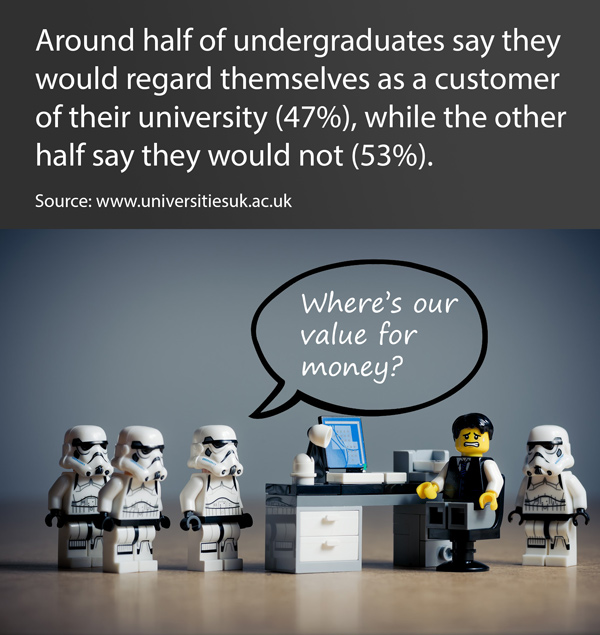
This change towards the ‘students as customers’ should come as no surprise.
Indeed it was the explicit intention of the Minister of State for Universities and Science:
“Defending his decision to hike fees, David Willetts said that students would become ‘customers’ who would in turn have ‘much greater expectations’ from universities.”
When the government permitted institutions to charge £9000, they also removed most of the funding support for student fees, forcing many universities to charge the maximum to cover costs.
 A student from Liverpool Hope University said “As a customer, and a student, I wouldn’t buy my lunch from Waitrose, I’d go to Tesco because that’s better value. Unfortunately, there is no competition in fees for universities as they all set it to the same price, which, in my opinion, is not value. Universities believe it is fair to charge people the same amount irrespective of how much “output” they actually provide, so at the end of the day, you’re paying for that degree certificate.”
It is a difficult situation. Calling students “customers” may sound empowering on initial inspection, however, there are negative consequences to this commercially oriented relationship.
Seeing students as customers influences how teaching staff deliver lectures, with many reporting they are less willing to challenge students for fear of getting negative feedback. From a student perspective, feeling like a customer makes them feel that the onus is on the lecturer to ensure the outcome they paid for is contractually met. In this case, a degree.
 It turns out that from a legal standpoint, they are correct. The Consumer Rights Act of 2015 stipulates that university students who have purchased a course have the same rights as any other consumer where the service fails ‘to conly there now exist private educational operations that offer a money-back ‘job offer guarantee’! Perhaps a harbinger of what is to come?
The bottom line is we have been conditioned to view ourselves as customers if we pay for a product or service.
There is little that can be done, and the number of students seeing themselves as customers is rising. Since fees were introduced, a survey by Universities UK has found that nearly half of undergraduates now consider themselves as a customer of their university (whilst only 18% would for their school).
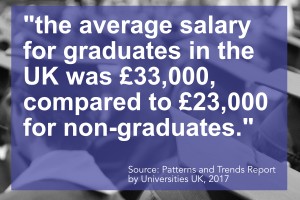
Institutions can ultimately demonstrate value delivery by using a statistic such as ‘the average salary for graduates in the UK was £33,000, compared to £23,000 for non-graduates’.
The challenge for alumni professionals is to maintain a relationship with our graduates and demonstrate continued value as they walk out the door.
 Alumni as Customers
Once the degree is in the bag, there is a big risk of a ‘transaction complete’ mentality kicking in. This attitude is not exclusive to alumni but can also be reflected by the institution itself. To many at universities, alumni are seen as ‘job done’ and thus a lower priority. Thankfully, leadership is increasingly acknowledging the importance of a strong alumni community and its criticality for essential fundraising.
Fortunately, universities have a distinct advantage when competing for attention; four out of five alumni say that they value the relationship with their institution. It is crucial, however, that at the end of a course, fresh alumni are stewarded carefully and welcomed to continue their role as your ‘customer’. Invite them to join your community, much like those customers of top ‘participatory brands’ feel when they walk out with their purchase.
In my next blog, Death by Disruption, I explore this theme further drawing lessons from how disruption is impacting the private sector.
I am pleased to share the International Alumni Relations Report we produced in collaboration with CASE. It contains key findings that support my personal passion for leveraging online technologies to build communities that create meaningful relationships between people.
Daniel Watts
MD, Aluminati Network Group

The post Should you call your Alumni the “C-word”? appeared first on Aluminati Network Group.
]]>The post The case for alumni relations appeared first on Aluminati Network Group.
]]>Universities are in most cases, stable, risk adverse institutions designed to last for millennia.
With increasing uncertainty about secure funding and changing political climate, ever more universities are viewing their alumni network as an essential component of their continued longevity.
Despite the challenges, advancements in communications and technology present new opportunities to dramatically increase engagement.
Reasons why universities are investing in in alumni relations:
 1 Philanthropic income
In 2017, Annual donations to UK universities exceeded £1bn. The Ross-Case survey of higher education, conducted by the Council for Advancement and Support of Education (Case) Europe, showed that the total amount of philanthropic income secured in new funds by 110 participating universities had risen by 23%.
2 Adding value
Providing value to students and alumni means offering an education that will lead to successful careers for their graduates.
Mentoring oportunities and executive programs can support students and alumni throughout their life journey, making them feel valued and more likely to engage or give back.

3 Securing the future
Attracting new cohorts of students and growing capacity is key to the future success of any institution. A large and engaged community increases the standing of your university,and engaged alumni act as ambassadors, keeping the life blood of your institution flowing.
Today’s cohort of students are young, tech savvy, and have often paid high tuition fees. They expect to get great value from the institution they whilst they attend and beyond.
With this in mind, how can careers and AR professionals build on the relationships started in freshers week, continue to provide value, and stay relevant?
The university experience holds a special place in the hearts of graduates. It is often the first time many have felt true independence from home. It also marks the point where they embark on their career paths and take ownership of their own goals.
When new students enter an institution, they enjoy the full experience, knowing they are following in the footsteps of countless generations before them. The longstanding traditions, close friendships, inspirational role models, and even charming inefficiencies play a role in creating the emotional hooks that that immortalise your institution in their hearts.
It is also the final phase of their formal education before taking embarking on their journey in the real world and leaving the ‘protective bubble’ they have grown accustomed to.
Once graduated, from a alma mater perspective, they are a less pressing and more difficult to engage prospect. Meanwhile, alumni in the real world face a world of distraction, leading busy lives, with other organisations and businesses aggressively competing for their attention.
Staying in touch
There is a small percentage of your alumni that will always stay in touch, those who you will never hear from again, and the vast majority that make up the middle. It is this majority that need to have the relationships nurtured most… and that is the challenge for institutions today.
Adapting to the changing environment
From the outset, your institution already has a distinct advantage over others vying for attention, and that is trust. High performing alumni programmes build on this trusted relationship using modern technologies and communications to manage, scale and extract value from their engagement programmes.
I’d like to share the CASE International Alumni Relations Report with you. It contains key findings that sit very well with my personal passion for leveraging online technologies to create meaningful connections between people and to build communities.
The post The case for alumni relations appeared first on Aluminati Network Group.
]]>