The post Lessons from Establishing an Alumni Community at Coca-Cola appeared first on Aluminati Network Group.
]]>
Rebecca Cedrone, Vice President of Marketing & Enterprise Partnerships at Aluminati, spent 20-years of her career at Coca-Cola where she utilized her expertise in marketing to drive impact with brands, organizations and people. Four years ago she became their Director of Alumni & Community Marketing and was the keynote speaker at our recent Creating Connection webinar. Rebecca shared her experience in establishing the Coca-Cola alumni community from initial research through strategy development and launch.
Lifelong employment is no longer the norm. Building lifelong relationships should be.
Today, the large scale trends that are impacting the employer-employee relationship are:
- Increasing globalization
- War for talent
- Changing values and expectations of work
- Ubiquitous adoption of enabling technologies
Companies spend countless hours focusing on culture and this practice shouldn’t cease when an employee leaves the company. Many Fortune 500 companies have some form of alumni program. Some are alumni-led, some are corporate-led and nearly all are inclusive of former associates.
Why have an alumni program?
Organizations establish corporate alumni programs for many reasons and talent acquisition, brand advocacy and business development are at the top of the list. Many companies even place a monetary value on alumni that are rehired, which can lead to significant cost savings.
For Coca-Cola, corporate social responsibility also played a part, providing alumni with volunteer opportunities. Through those opportunities, they can target their CSR efforts and impact to the communities they serve. A factor that is held in high regard by the company.

Whatever the reasons for developing an alumni program, organizations are reaping significant benefits.

So how can an organization take these insights and embark upon developing their own alumni community? Rebecca argued that companies must utilize human-centred design to better understand their alumni. Developing a community that is centered on the needs of their alumni, will drive a sense of community, engagement and value.

At the beginning of the development process, Rebecca and her team at Coca-Cola interviewed their alumni, retirees and current employees. From that, they identified three areas of opportunity.
- Expand the community
- Enhance the experience
- Evolve the offerings
They noticed that the company’s original definition of alumni could be expanded to include more associates, leading to increased engagement. Opportunities were discovered to enhance the user experience for their alumni by making improvements to the website and at the same time providing more opportunities for increased alumni engagement.
Rebecca also identified a diverse audience with varying needs. From this, she was able to develop six key alumni profiles to illustrate the range of perspectives and needs that a future alumni community would need to serve.
“The key is being able to engage with each profile appropriately and having a communications strategy that addresses their specific needs”. – Rebecca Cedrone
Vision & Value
Rebecca argued that companies need to define their own vision and value proposition. Looking to nurture lifelong relationships with members by embracing their individuality, cultivating their connection to each other and empowering them to influence the future of the business and the brand. Fostering intellectual curiosity through opportunities to both contribute to and learn from the communities collective knowledge and skills.
Members should be empowered to make a difference by honoring shared values and responsibilities. Rebecca noted that these values will allow an organization to constantly evaluate the development and success of the community.
Designing an Alumni Community with a layered approach
Creating meaningful alumni offerings requires a holistic approach to truly identify human needs and desires and orchestrate moments that matter for all segments of the alumni community.
A layered approach allows a company to connect the business proposition with the needs of alumni to create an engaging experience, while also enhancing key business drivers.

Choosing the right platform
Rebecca noted that it is vital to choose a scalable platform where members can engage, find value and allows them to manage key business metrics. Collaboration and support from across the organization is critical to the success of the alumni community and implementation begins with senior leadership alignment, with a ‘top-down’ approach.

The Key Takeaways
In summary, for an organization to develop a truly effective alumni community, Rebecca noted four key points to consider.
- Identify the key benefits of developing an alumni community
- Understand the needs of your alumni
- Align the strategy and execution across your organization
- Identify a scalable platform with a provider who prioritizes your brand, your key business metrics and your alumni needs.
Find out how the Aluminate Community Builder can provide new opportunities for your organization and alumni community.
The post Lessons from Establishing an Alumni Community at Coca-Cola appeared first on Aluminati Network Group.
]]>The post Demonstrating the Value of Alumni Relations appeared first on Aluminati Network Group.
]]>
Alumni are your institution’s biggest stakeholder group and the living embodiment of your institution’s goals. However, whilst maintaining a world-class alumni relations programme is neither easy nor cheap, failing to invest at all in it will make life harder and be more expensive in the long run.
Alumni Relations programmes have very real goals and should be aligned closely with those of your institution. Typical examples include working with alumni to find advocates, expanding employment opportunities, fundraising, increasing student recruitment and more. This particular event discussed how institutions as a sector can demonstrate the impact of their work by sharing best-practices.
The panel were all asked the same question, Why is Alumni Relations Important?
Ian Moore, Head of Alumni Relations and Annual Giving at the Queen’s University in Belfast said that one of the things he is conscious of is that Alumni are the living embodiment of a university’s product and that whilst knowledge is not something you can see, you can see it being used and the impact they have on the world around them. Alumni are constantly exposing the values that have been instilled in them by their time at university and their success reflects on the institution. Universities need to know who their alumni are, where they are, and what they are doing.
Holly Peterson, Head of Constituency Engagement at the University of London, UK noted that the two main things that an institution produces are alumni and research. Whilst research and fundraising programmes can have more obvious routes to success, alumni relations goals are not as clear cut. Holly suggested that universities have the potential to produce thoughtful humans who use their knowledge to make the world a better place. She also noted that lots of studies have shown that people who receive a university education are more civilly engaged. It is important to see how university affects alumni by staying in touch with them and understanding how they are taking their work into the world.
Any Alumni Relations department must ask themselves what their institution’s goals are, what their alumni engagement strategy is, and how can their alumni help the institution achieve its mission? Many programmes will focus on alumni employability and securing university places for school-leavers. Our recent study, Mentoring Improves the Employability of University Graduates shows how important alumni-student mentoring programmes can be in helping with this goal.
..
Suggestions for ways to increase alumni engagement were to implement regular communication as to what the university is doing with news and upcoming events. It was also suggested that events should be seen as an opportunity to share information with an institution’s alumni base and perhaps prompt further engagement from that point. Events are also a good opportunity to identify notable alumni and make them donors, volunteers or ambassadors for an institution. Virtual events have also become a valuable resource for increasing geographical engagement.
Jimmy Buck, Chief Advancement Officer at Deakin University, Australia, noted that alumni relations programmes were not meant to merely babysit but should focus more on the role of a power broker.
Measurements and KPIs
What measures should we use to demonstrate effectiveness to university leaders and senior stakeholders?
Ian Moore stated that the world of alumni relations is changing and that changes are also occurring in the way alumni relations departments operate.
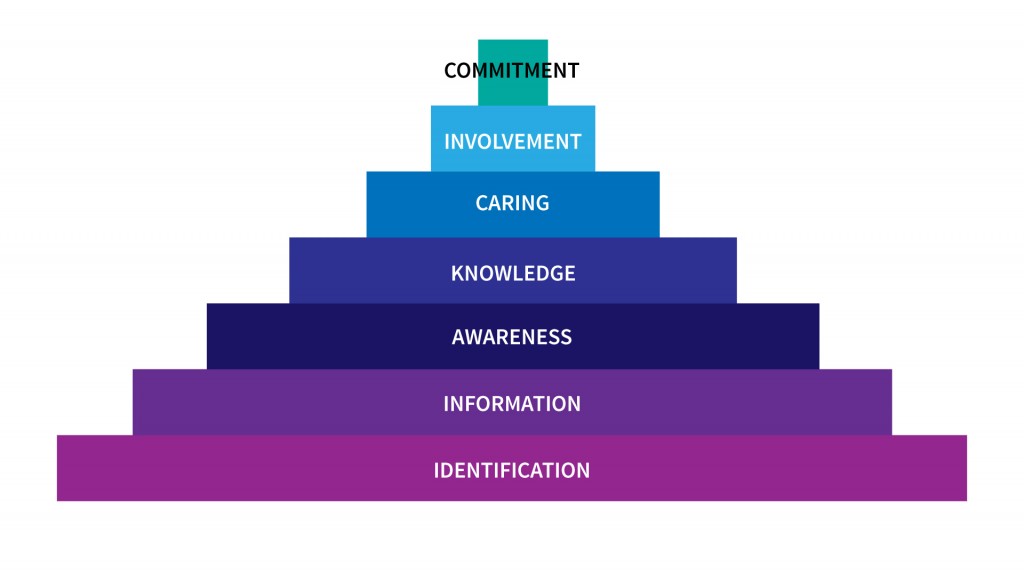
The old model of engagement is linear and makes assumptions that people are the same. Ian argues that people are more complex than this model allows for and that the best way to measure engagement and relationships is to focus more on impact. “Impact is King”, he stated.
How an institution’s goals and bottom-line is supported by these programmes is a crucial measurement of success. It was also noted that it was important to compare engagement levels with those of similar institutions.
Holly Peterson stated that it is also very important to maintain transparency with your alumni as to why you are doing what you are doing. That way, they will be more satisfied with their experience and in turn, be more likely to engage and advocate.
Jimmy Buck noted that pyramid models are good at showing trajectory but when it comes to individual prospects, alumni engagement pathways can go in many directions, much like a tube map. There are a number of ways alumni can add value to an institution, yet no concrete way of measuring this. Alumni relations are constantly evolving and by the time universities have figured out what works, things have moved on.
However, the panel all agreed on the importance of collaboration with other departments within an institution, for example communicating with fundraising departments and student affairs to make sure that everyone is working towards key goals.
As Ian stated at the conference, “Impact is King”.
Aluminati was proud to sponsor the Introduction to Advancement Leadership conference hosted by CASE. Held in November and December 2020, it featured talks covering various topics, with panels of industry leaders and experts leading the conversations. Be sure to check out our previous article in this series Your International Alumni Really Matter – Here’s Why.
Find out how Aluminati can help supercharge the impact of your institution’s alumni relations programmes.
The post Demonstrating the Value of Alumni Relations appeared first on Aluminati Network Group.
]]>The post How to Increase Your Online Community Engagement appeared first on Aluminati Network Group.
]]>
Maria Gutierrez and Johana Canda-Fiserova, Platform Strategy Consultants here at Aluminati hosted the session and began by asking the question, What are the most important metrics to your institution for measuring the success of your alumni engagement programmes?
Maybe you quickly thought of metrics such as the number of registered users, social media engagement and amount of page views. But these metrics are more so used to indicate the size of an online community… they are just the tip of the iceberg when it comes to data analysis.
We know that online platforms (like our Aluminate Community Builder) generate a huge amount of data. At Aluminati, we love processing and analyzing data sets, but we realize that it might seem like a daunting task…especially if you don’t have a dedicated analyst! We’ll share four of our best tips and tactics to make strategic, data-based decisions. Even without a data analyst on staff, you can use these tactics to bolster (or challenge!) your current understanding of your community.
1. Profile Pictures

The first key data set that institutions can consider is user profile pictures. Research into Aluminate clients has shown that on average, 42% of a platform’s population have a profile picture, with the highest performing having approximately 53%. Maria noted that the importance of profile pictures in a community is key and that users who have one become much more approachable and open to further engagement.
2. Employment Records

The research carried out by Maria and Johana revealed that on average, 48% of Aluminate clients total platform populations had completed employment profiles. The best performing client saw 90% of their users complete employment records. Visible employment history can make a user appear much more genuine and is an important factor in measuring the integrity of the user data. Maria noted that employment records are also a gold mine for an institution as it enables a university to identify and target users for fundraising programmes, speaking engagements and other campaigns where alumni can be a benefit.
3. Active Mentoring Relationships

Most institutions expect a high percentage of mentoring engagement on their platforms but research revealed that on average, only 2.72% of users were actively engaged, with the highest being just 3.2%. However, mentoring is such an important factor that even such low numbers can mean a great deal for an institution. For example, alumni that are actively engaged in an institution’s mentoring programmes are more likely to become donors.
4. Age Distribution

Unsurprisingly, the largest data subset for age distribution was the 22 – 30 age range. It was noted that most institutions had not launched any target campaigns aimed at bringing older alumni to the platform. This is based on the assumption that older generations would be less likely to want to engage with an institution in an online environment. However, this is not always the case and older age groups can indeed be encouraged to engage online, for example, through ‘nostalgia’ campaigns. It is important to define different strategies for each age group.
A monthly review can help an institution stay on top of the large amount of data that can be collected, and we can advise Aluminate users on how best to export and analyse their own data in an online session with our consultants.
Find out how Aluminati can help supercharge your institution’s alumni relations programmes.
The post How to Increase Your Online Community Engagement appeared first on Aluminati Network Group.
]]>The post Mentoring Improves the Employability of University Graduates appeared first on Aluminati Network Group.
]]>The Effects of Mentoring on Employability is a fascinating study that draws conclusions from a large and diverse set of data. Over 23,000 individuals were included with 1756 participating in mentoring, with 625 engaged in strong mentoring relationships.
The results are exciting, to say the least: a 4.5-month reduction in job search time amongst 18-23-year-old participants, revealing a strong relationship between mentoring and employability.
Engagement initiatives, particularly mentoring initiatives, are known to have positive effects, but there are few statistics that show their true impact. This makes it difficult to get long-term investment, both financially and in terms of staff hours to run these projects.
Therefore, this study is significant. It presents compelling evidence clearly demonstrating the tangible impact of mentoring on employability for graduates, one of the most important metrics for higher education institutions.
From my professional experience, I know mentoring initiatives usually require low investment in the long-term, and once set-up, bring many benefits to the institution at a low cost. Re-engaging alumni supports career objectives, student satisfaction and fundraising campaigns. It is hard to think of other initiatives that serve so many purposes and have such a measurable impact beyond graduation.
This study opens the door to new data-driven insights around engagement initiatives which ultimately will benefit all of us.
Maria Gutierrez
Strategic and Mentoring Consultant
Download the White Paper
The post Mentoring Improves the Employability of University Graduates appeared first on Aluminati Network Group.
]]>